
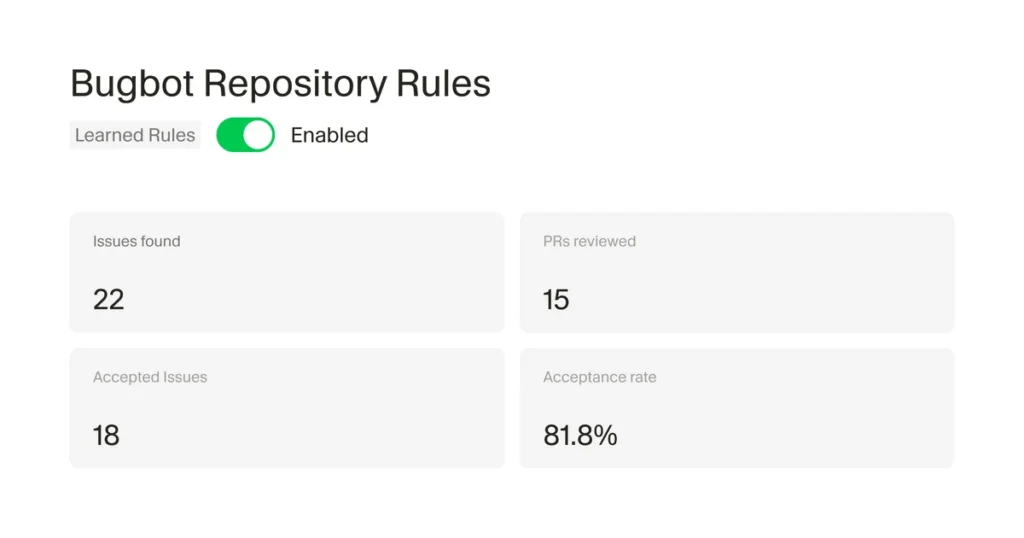
Cursor’s Bugbot has made remarkable strides in the realm of AI code reviewing. Launched in July 2025, Bugbot now boasts an impressive bug resolution rate approaching 80%, a notable improvement over its initial 52%. This leap has positioned Bugbot ahead of its primary competitors, such as Greptile and CodeRabbit. The key to its success lies in its ability to learn from direct, real-time feedback during active pull request (PR) reviews. This self-improvement mechanism marks a significant shift from the previous reliance on offline testing, allowing Bugbot to adapt quickly to the nuances of individual codebases.
Bugbot’s learning process is driven by signals extracted from merged PRs. Input from developers—including reactions like downvotes and detailed comments—helps refine its understanding of what constitutes a successful code review. This feedback loop enables Bugbot to formulate custom rules that target specific code issues, aligning closely with business priorities. For instance, if a segment of code commonly receives negative feedback, Bugbot can identify patterns and modify its approach accordingly. This continuous evolution not only enhances accuracy but also facilitates a deeper understanding of project-specific contexts.
Comparing Bugbot with other automation tools for small to medium-sized businesses (SMBs) provides valuable insights into their relative capabilities. Greptile, another player in the code review sphere, offers a strong focus on seamless integration with existing development workflows. Its user interface is intuitive, making it appealing for teams that value quick learning curves. However, Greptile lacks the self-improvement features that Bugbot has implemented, which could pose challenges in rapidly evolving codebases. For SMBs focused on integrating code review tools quickly without a steep learning curve, Greptile might be the preferred option.
On the other hand, CodeRabbit emphasizes collaboration among teams and offers real-time commenting features, which encourage a back-and-forth dialogue between team members during code reviews. This collaborative element can prove beneficial for teams that prioritize human interaction and iterative feedback. However, CodeRabbit’s pricing structure can be less favorable for SMBs, often requiring a tiered subscription model that increases with team size. For businesses keen on fostering collaboration and who have the budget to support it, CodeRabbit is a strong contender.
When considering total cost of ownership (TCO), Bugbot’s pricing is competitive, especially for its level of innovation. The initial investment can yield a significant return, especially given the potential to reduce the time developers spend on code revisions. Within three to six months, businesses can expect increased efficiency, which translates into fewer errors, shorter review cycles, and a corresponding boost in productivity. This positive impact on software development timelines can lead to greater revenue generation and customer satisfaction.
Migration to Bugbot can be streamlined by developing a low-risk pilot program. Businesses can start by integrating Bugbot with a single project, allowing them to understand its functionality and capabilities without overwhelming their team. This phased approach affords companies the opportunity to calibrate Bugbot’s learning features, ensuring that it aligns with both the technical and cultural aspects of their development environment. As teams acclimatize to Bugbot’s workflow, they can gradually roll it out across additional projects, minimizing disruption.
For businesses looking to balance features, integration, and cost-efficiency, Bugbot stands out with its self-learning capability. This continuous improvement model allows for adaptability that tools like Greptile and CodeRabbit do not currently match. However, for teams that prioritize immediate collaboration or a more user-friendly interface, these alternatives might be viable. Ultimately, choosing the right tool hinges on the specific needs and workflows of the business.
FlowMind AI Insight: As AI tools continue to advance, understanding their unique strengths and weaknesses becomes vital for businesses. Organizations can maximize their efficiency and productivity by aligning their chosen tools with their specific requirements, ensuring that the technology enhances rather than disrupts their workflows.
Original article: Read here
2026-04-08 21:01:00