
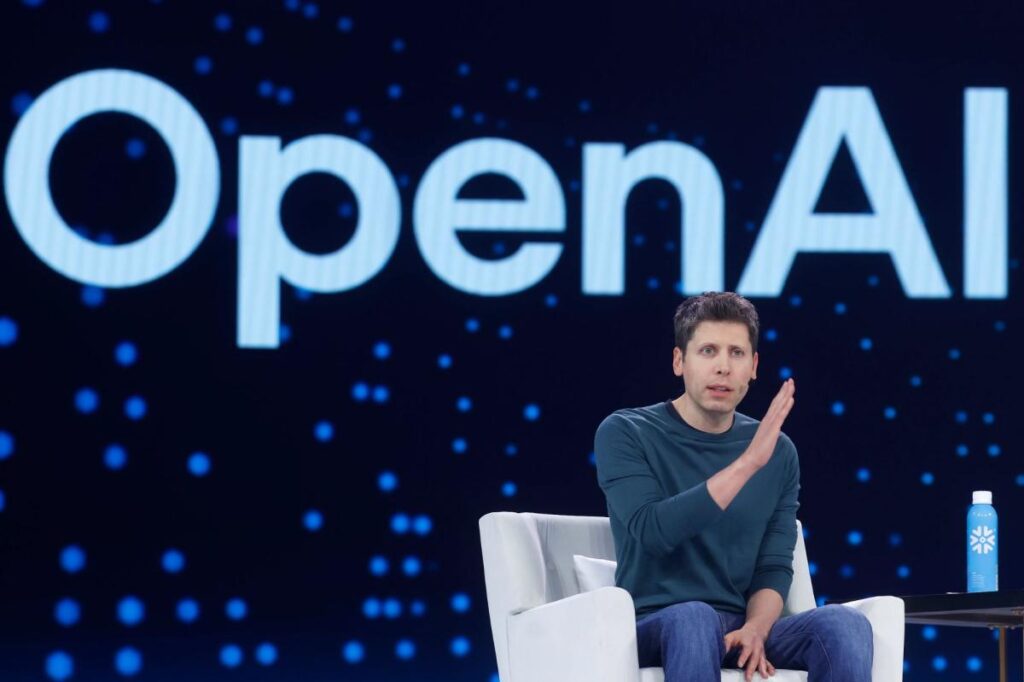
OpenAI’s recent acquisition of TBPN marks a significant yet intriguing shift in the company’s strategic focus, as it jostles for position in a fiercely competitive landscape against emerging rival Anthropic. This acquisition, which came unexpectedly given OpenAI’s prior emphasis on enterprise-level AI coding tools, suggests a broader strategy aimed at bolstering the company’s presence in information dissemination. This move could have consequential implications for how SMB leaders and automation specialists evaluate the shifting tech landscape, particularly in understanding the place of AI and automation in their operational frameworks.
The TBPN talk show, known for its interviews with high-level executives from major tech companies, offers OpenAI a unique platform to directly communicate its narrative and vision regarding artificial intelligence and automation. By employing this channel, OpenAI may enhance its ability to shape understanding around AI advancements and drive meaningful dialogue among key stakeholders in the industry. However, this also necessitates maintaining editorial independence to foster credibility—an endeavor that can be particularly challenging in the realm of corporate-owned media.
Examining the implications for SMB leaders demands a deeper scrutiny of the contours of AI and automation platforms alongside emerging competitors. A significant point of comparison is between OpenAI and Anthropic, particularly in terms of cost structures, scalability, and ROI for enterprises. OpenAI’s products, such as GPT-4, have garnered attention for their robustness, versatility, and adaptability across various applications. However, costs can quickly accumulate, with usage-based pricing models that may prove prohibitive for some smaller businesses.
Conversely, Anthropic has carved its niche by focusing on creating safety-conscious AI models. While its offerings also enable a wide range of applications, the nuances in approach warrant consideration. SMBs seeking to implement AI solutions should evaluate the specific needs of their operations. If a focus on ethical AI deployment and governance is paramount, Anthropic might align better with their goals. In terms of pricing, organizations should perform a cost-benefit analysis, comparing variables such as user count, expected scale of operation, and potential application variety to make informed choices.
Automation platforms also present compelling avenues for improving operational efficiencies within smaller organizations. For instance, Make and Zapier both provide automation services, facilitating seamless integrations among applications. Make offers a more visual interface and encourages deeper customization, which may appeal to tech-savvy teams. However, it can also have a steeper learning curve for those unfamiliar with automation technology. Conversely, Zapier is often viewed as more user-friendly, albeit with some limitations in terms of complex automation scenarios. Evaluating the strengths and weaknesses of these platforms against the specific operational contexts of an SMB is essential for maximizing ROI.
The future of automation tools will be influenced by their ability to scale with evolving business needs. SMBs must assess not only the immediate costs but also the longitudinal viability of integrating such solutions. With rapid technological advancements, the ability to pivot and adapt will be critical. This adaptation can be made smoother through strategic partnerships and staying informed about industry trends, such as those highlighted in TBPN discussions.
Ultimately, leaders must ensure that they are actively engaging with the narratives and data emerging around AI and automation technologies. By prioritizing transparency and ethical considerations, coupled with robust evaluation matrices for tools and platforms, organizations can position themselves for sustainable success.
FlowMind AI Insight: The acquisition of TBPN by OpenAI illustrates a broader trend where tech companies are intertwining media and communication strategies to shape their narratives. For SMB leaders, leveraging insights from various platforms will not only enhance understanding but also optimize decision-making processes related to AI and automation.
Original article: Read here
2026-04-02 20:32:00