
As small and medium-sized businesses (SMBs) increasingly seek to enhance efficiency and reduce costs, the adoption of AI and automation tools has accelerated. Among the myriad options available, two notable solutions are CoCounsel Legal and MyCase. These platforms offer distinct advantages that cater specifically to the needs of legal professionals and small businesses alike.
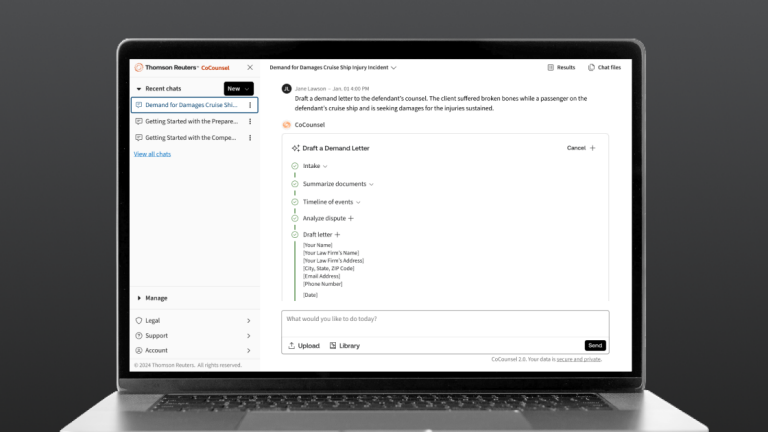
CoCounsel Legal positions itself as a comprehensive AI-driven solution that streamlines complex legal tasks. It focuses on research, document analysis, and drafting in an all-in-one environment. CoCounsel Legal utilizes advanced AI technology coupled with trusted legal data, providing users with step-by-step guidance through intricate legal processes. This tool enables legal professionals to expedite their workflow, allowing them to concentrate on high-value strategies that yield better outcomes and foster business growth.
In contrast, MyCase offers a broader approach, functioning as a full-scale practice management software that emphasizes case management, billing, and client communication. This tool is particularly valuable for SMBs seeking an all-encompassing solution that facilitates client collaboration, document sharing, and invoice management. MyCase integrates a client portal that enhances communication and serves as a streamlined method for sharing documents and updates.
When evaluating these tools based on features, CoCounsel Legal is robust in research capabilities and document automation. It is suitable for legal professionals who must analyze vast amounts of information quickly. In a real-world scenario, a law firm tasked with drafting a motion could use CoCounsel’s AI capabilities to swiftly collate relevant case law and generate a draft. This speed is critical in a profession where time-sensitive decisions can significantly impact outcomes.
Conversely, MyCase’s strengths lie in its comprehensive practice management functionalities. For instance, an SMB that prioritizes effective client engagement and seamless communication would find MyCase’s client portal invaluable. A firm with a growing client base would benefit from MyCase’s integrated billing features, allowing for timely invoicing alongside efficient case management processes.
Reliability is another critical factor when considering these tools. CoCounsel Legal is backed by robust AI that has been tested across numerous legal scenarios. Its performance metrics indicate a high accuracy rate when parsing legal documents and providing relevant suggestions. This reliability ensures that legal professionals can trust the analyses and recommendations that the AI generates.
MyCase also boasts impressive reliability, particularly in its client-facing functionalities. With consistent uptime reported, both clients and legal teams experience uninterrupted access. However, MyCase may lag in the depth of legal research capabilities compared to CoCounsel Legal.
Regarding pricing, potential users must consider their specific needs. CoCounsel Legal typically operates on a subscription model, with costs varying depending on the number of users and features selected. Firms focused mainly on legal research and drafting may find this pricing model beneficial as it aligns closely with their core functions.
MyCase, on the other hand, tends to be more versatile in its pricing. It offers several plans that cater to varying levels of need, from solo practitioners to larger firms. This flexibility allows SMBs to adopt a plan that aligns with their operational scale, although they may pay for features that may not be utilized fully.
Integrations also play a pivotal role in determining the better choice for an SMB. CoCounsel Legal, while specialized, offers integrations with key legal software that enhances its usability. However, users must ensure that these integrations align with their existing technology stack. On the other hand, MyCase stands out due to its extensive third-party integrations, making it a flexible option for businesses that utilize various other platforms, such as accounting software, marketing tools, or electronic payment systems.
Scalability comes into play as a deciding factor. CoCounsel Legal may be better suited for firms concentrating on legal analytics and that require deep legal understanding. As such, it excels within specialized legal environments. Conversely, firms looking for a broad-based practice management solution may find MyCase to be more accommodating as they grow in size and complexity.
Migration to either platform will require thoughtful consideration. For CoCounsel Legal, firms must begin by exporting existing legal documents and data from their current systems. This process may involve standardizing formats to align with CoCounsel’s requirements. Conducting a low-risk pilot phase using a select case or project can reveal potential challenges without significantly disrupting overall operations.
For MyCase, the migration process would involve similar steps. Users will have to ensure all case files and client information are backed up and then systematically import this data into the new system. A pilot project would enable teams to test MyCase’s functionality in a limited capacity, ensuring that workflows remain intact before a full-scale rollout.
When assessing the total cost of ownership, SMBs should consider not just the subscription fees but also the time and resources allocated for training staff and the potential need for additional hardware or tools. A projection of ROI over three to six months reveals that while upfront costs may seem significant, the efficiencies gained through improved workflow and reduced manual hours can lead to substantial savings. For instance, if CoCounsel Legal reduces average document drafting time by 30 hours a month per attorney, this can translate to significant cost savings on billable hours.
FlowMind AI Insight: The decision between CoCounsel Legal and MyCase will ultimately depend on an SMB’s specific priorities and future growth trajectory. By evaluating all factors thoroughly, businesses can ensure they select a solution that not only meets current demands but also supports long-term objectives in an increasingly competitive landscape.
Original article: Read here
2025-08-11 16:29:00