
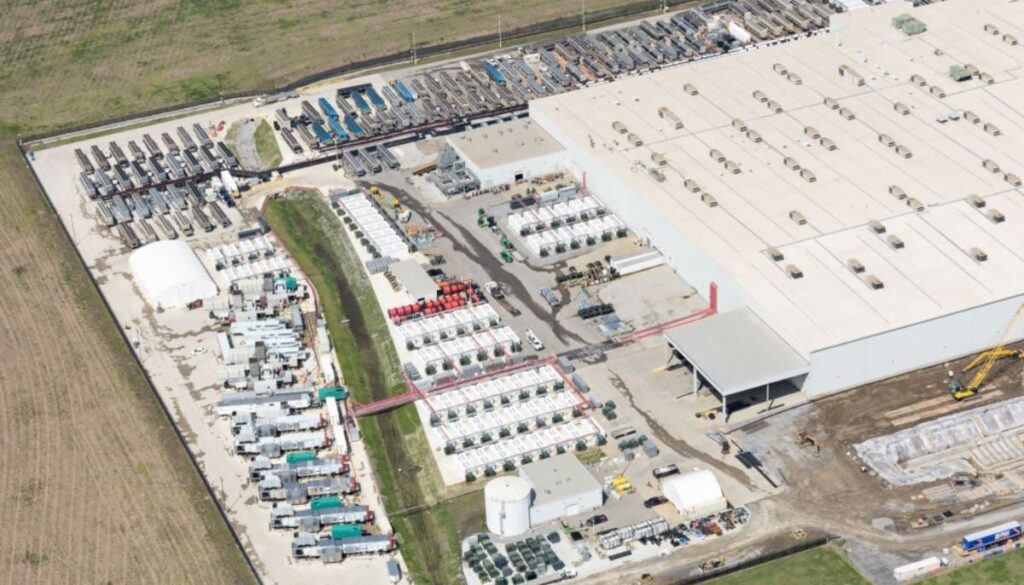
Elon Musk’s xAI has recently unveiled Colossus 2, the first-ever gigawatt-scale (GW) AI training supercluster, a significant leap for artificial intelligence infrastructure. This development not only sets xAI apart from competitors like OpenAI and Anthropic, who are experiencing delays in their own projects, but it also raises critical questions about the future of AI computing power and scalability in the industry. The rapid deployment of this infrastructure highlights the pressing need for reliable and high-output supercomputers as AI models grow in complexity and capability. As businesses increasingly rely on AI solutions, understanding the functional differences, cost implications, and performance metrics of various platforms becomes paramount.
When considering AI platforms, it is essential to evaluate the strengths and weaknesses of market leaders and emerging contenders. For instance, OpenAI has garnered vast attention and investment due to its transformative models like GPT-3 and GPT-4. However, the concern arises over the sustainability and scalability of such services. OpenAI’s existing limitations with processing power are evident, as they have projected a timeline extending into 2027 for their next major breakthroughs. In contrast, Musk’s xAI has effectively utilized existing resources, constructing Colossus 2 using on-site gas turbines and Tesla Megapacks, with goals to double its capacity within months. This strategic use of resources accelerates the pace of innovation, meaning xAI could potentially lead the market in not just capabilities but in environmental alignment as well.
Conversely, Anthropic has positioned itself as a leading competitor focusing on AI safety and reliability. Its model, Claude, often cited for its robust ethical guidelines, competes on a different value proposition—one that emphasizes responsible AI deployment. However, the slower development cycle and higher operational costs associated with compliance initiatives may impede scalability. Businesses targeting rapid deployment and flexibility might find xAI’s comprehensive training capabilities more appealing than Anthropic’s cautious approach, even as the latter strives for responsible AI development.
The cost differential between these platforms also plays a crucial role in decision-making. OpenAI and Anthropic often require substantial upfront investment for licensing, cloud storage, and ongoing operational fees. xAI positions itself as a potentially more cost-effective alternative by leveraging existing infrastructure. The computation generated by Colossus 2 can be sourced from gas turbines, which can reduce reliance on traditional power grids. This reduces total cost of ownership for ventures relying on AI, driving increased ROI for implementations.
As companies weigh their options, analyzing the scalability of these platforms is vital. Both OpenAI and Anthropic currently leverage cloud-based solutions, implying high scalability potential. However, scalability in terms of immediate processing power lacks comparative strength against xAI’s Colossus 2. At its current draw, this facility matches the peak electricity demand of major urban areas, suggesting it can meet growing customer needs efficiently and effectively. The real-time deployment of AI solutions becomes crucial as businesses aim to respond swiftly to market dynamics.
Moreover, understanding the operational constraints inherent in adopting these platforms is essential. While OpenAI’s API might be simple to integrate into existing systems, its latency and dependability come into question during high-demand scenarios. Anthropic’s models, while robust, require more thorough customization for specific business applications, potentially elongating implementation timelines. On the other hand, the immediate availability of Colossus 2 for substantial, heavy-duty applications provides enterprises with a distinct competitive edge that translates to faster time-to-market for AI-driven initiatives.
These comparative analyses yield important takeaways for SMB leaders and automation specialists. First, it is crucial to match platform capabilities with business needs and desired outcomes. Extensive vetting of platforms should consider not only immediate costs but also long-term scalability, operational reliability, and the ability to adapt to changing market conditions. Project leaders should also account for the environmental impacts associated with their chosen infrastructure, mindful of growing stakeholder expectations for corporate responsibility.
As AI continues to evolve, staying informed on developments and innovations in the space will be essential for leaders aiming to leverage these technologies effectively. Considering current trends and future projections, the investments in AI infrastructures such as xAI’s Colossus 2 may well be worth their weight for those leveraging their inherent efficiencies.
FlowMind AI Insight: Organizations eyeing AI integration should evaluate infrastructure capabilities, including processing power and scalability. By aligning technology choices with emerging platforms like Colossus 2, businesses can gain not just operational efficiencies but a strategic advantage in a rapidly changing market landscape.
Original article: Read here
2026-01-18 13:00:00