
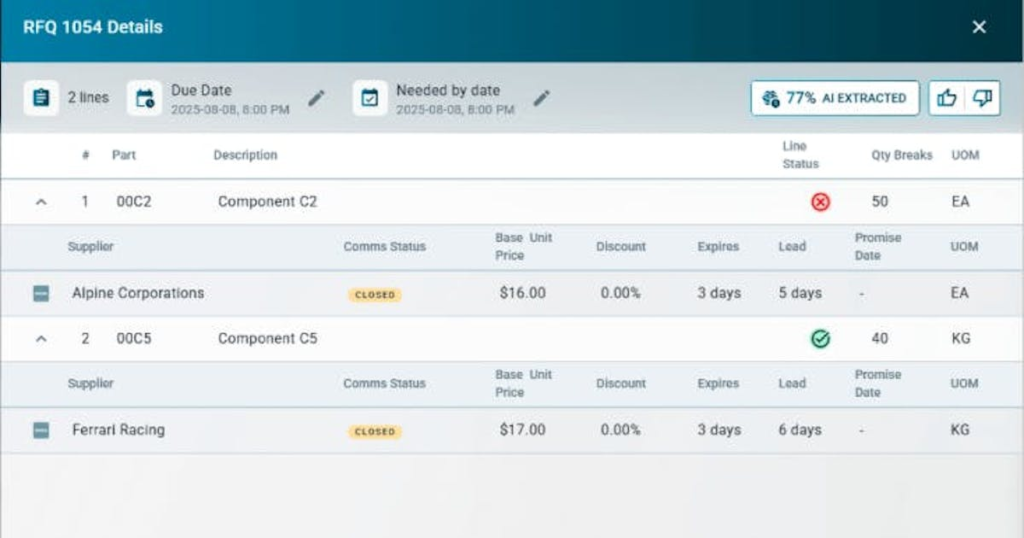
In today’s fast-paced business environment, automating processes can enhance efficiency, reduce costs, and propel decision-making. For small and mid-sized businesses looking to implement AI-powered automation, particularly in the realm of request for quote (RFQ) workflows, a systematic approach is essential. This tutorial aims to guide you through the steps to design, deploy, and monitor an AI automation for procurement, using tools like Epicor Prism Business Communications as a reference point.
To begin with, ensure that you have a foundational understanding of your current procurement processes. Review existing RFQ workflows, communication channels, and any software currently in use, especially if you are employing an ERP system. Having a clear overview will help identify areas ripe for automation. Also, assess your technological setup, including internet connectivity, as an AI solution will require reliable access.
Next, it’s vital to configure the AI-powered tool. If you’re considering Epicor Prism Business Communications, start by integrating it into your existing Epicor Kinetic environment. This integration is usually seamless due to its design compatibility. Follow the installation prompts provided by Epicor. You’ll typically need to enter your business’s data structure details, such as part IDs, lead times, and pricing models. This data is crucial for the AI agent to interact effectively with suppliers via email.
Once configured, initiate testing to ensure that the AI agent performs as expected. Set up a few RFQs with various parameters: different suppliers, products, and price points. Observe how the AI manages these inquiries through the email interface. For example, submit RFQs for three different parts to three suppliers and monitor the AI’s ability to handle quote comparison. Expected outcomes include succinct email exchanges, quick responses from suppliers, and automated suggestions for next steps.
After testing, the next stage is to monitor the AI’s performance. Establish metrics for success, such as RFQ cycle time, quote responsiveness, and overall supplier engagement. Utilize the reporting features available within the software to review performance data regularly. For instance, analyze the average time it takes for the AI to convert RFQs into actual purchase orders. Adjust your expectations and processes accordingly based on these insights.
Managing errors is an additional crucial component. Set up notifications or alerts within the software to flag problematic RFQs or communications. For instance, if the AI fails to retrieve necessary information or encounters a miscommunication, ensure that there is an easy way to amend these issues. Providing a support channel for users to escalate problems is also recommended to enhance operational efficiency.
Cost control is an important factor when deploying AI solutions. Since Epicor Prism Business Communications operates under an outcomes-based pricing model, your costs will directly correlate with successful RFQs converted into orders. Maintain a close eye on these metrics to ensure the software provides a satisfactory return on investment. Compare costs against manual processes to gauge the financial benefits of automation.
Beyond operational practices, it’s crucial to address security and data retention. When integrating AI tools, ensure that the software complies with industry standards for cybersecurity. Epicor generally adheres to robust security frameworks, but keep your data encrypted and regularly backed up. Review privacy policies, particularly how third-party supplier information is handled, to align with your organization’s data governance policies.
Vendor lock-in is another concern, as reliance on proprietary systems can limit flexibility. To mitigate this risk, document processes and establish clear transition plans to alternative solutions if necessary. Regularly evaluate your vendor’s offerings to ensure they continue to meet your business needs without excessive strain on resources.
Estimation of ROI is vital for any business considering AI automation. Start by analyzing time saved through automated RFQ processes compared to manual methods, alongside customer satisfaction levels post-implementation. For instance, if the AI reduces RFQ cycle time by 50% and increases order accuracy, the resulting savings and improved supplier relationships can translate into significant financial gains. Keep an ongoing account of these metrics; they will inform decisions on whether to scale up automation efforts in the future.
Finally, consider ongoing maintenance requirements. AI systems may require periodic updates and training as new suppliers and processes emerge. Allocate a part of your budget not only for initial implementation but also for the long-term upkeep of the system. Building a relationship with the vendor for ongoing support will be invaluable as your business evolves.
FlowMind AI Insight: As small and mid-sized businesses embrace AI for automation, it remains crucial to adopt a pragmatic approach to design, deployment, and monitoring. By ensuring thorough preparation, careful configuration, vigilant oversight, and a solid understanding of security and cost implications, organizations can harness the full potential of AI, positioning themselves competitively in the marketplace.
Original article: Read here
2025-10-24 15:02:00