
In recent months, the competitive landscape of artificial intelligence has become increasingly polarized, exemplified by the highly publicized rivalry between OpenAI and Anthropic. The stark contrasts between their leadership dynamics and operational philosophies offer SMB leaders and automation specialists valuable insights into the current state of AI tools and how they align with business needs.
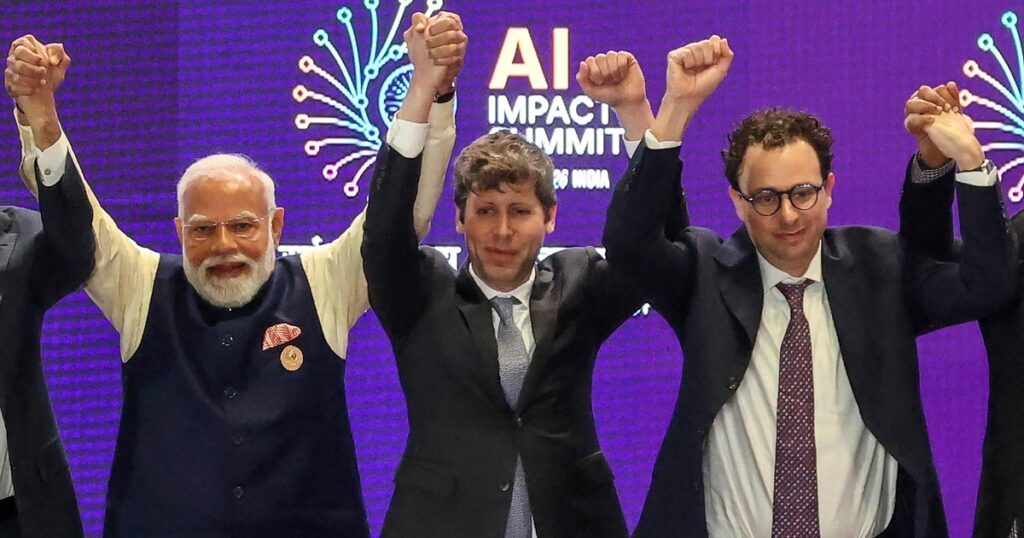
The competition became particularly pronounced when OpenAI’s CEO, Sam Altman, and Anthropic’s CEO, Dario Amodei, refrained from conventional displays of camaraderie at a high-profile gathering, signaling a deeper rift in their approaches to AI development. This schism was further emphasized when the organizations found themselves at odds over a Pentagon contract, spotlighting their divergent views on the role of AI in national security.
A critical analysis of these two AI platforms reveals nuanced strengths and weaknesses that decision-makers must consider when choosing between OpenAI and Anthropic for their automation needs.
OpenAI has made significant strides with its GPT series, particularly in natural language processing capabilities. The robust architecture allows for advanced text generation, summarization, and nuanced conversational interfaces. The company has positioned its product as user-friendly, appealing to businesses seeking to integrate AI-driven solutions without extensive technical expertise. However, this ease of use is often accompanied by premium pricing tiers, which can be a barrier for smaller businesses. The training data and model adjustments can incur ongoing costs, ranging from API usage fees to maintenance.
On the other hand, Anthropic’s offerings are grounded in a different philosophical approach. Emphasizing ethical considerations and long-term safety in AI deployment, Anthropic aims to build reliable AI systems that prioritize aligned values between machines and human users. Their Claude model exhibits promise in understanding context and intention, potentially leading to more effective interactions in business applications. Competitive pricing strategies make Anthropic appealing for SMBs wishing to leverage AI capabilities without overextending their budgets. However, the early-stage nature of Anthropic’s technology may pose challenges regarding predictability and maturity.
When analyzing the return on investment (ROI) potential for each platform, it becomes evident that OpenAI’s established reputation provides a sense of reliability. Many case studies reflect successful integrations that have been profitable for SMBs, particularly in fields like marketing, customer service, and content creation. For enterprises willing to invest strategically, the long-term benefits—including increased operational efficiency and customer engagement—can outweigh initial costs.
Conversely, while Anthropic’s solutions are still emerging, early adopters have begun to report positive results, particularly in sectors demanding rigorous ethical adherence and alignment with social values. However, the relatively nascent status of their tools might translate into unpredictable performance and limited scalability in comparison to OpenAI’s more mature product offerings.
Scaling AI tools is another critical factor that SMB leaders must weigh. The integration journey with OpenAI may initially appear daunting, but the breadth of its capabilities—from enterprise-level solutions to plug-and-play applications—generally affords a greater range of scalability options. As businesses grow, OpenAI’s APIs can evolve with them, supporting increased demand for complex operations. Anthropic’s focus on safety and interpretability provides an interesting avenue for growth, yet its ability to scale effectively remains to be fully established amidst broader industry adoption.
Given the current landscape, it is advisable for SMB leaders to conduct detailed assessments of their unique operational needs when selecting an AI platform. Companies that require immediate and predictable results may benefit more from partnering with OpenAI, while those with longer-term strategies that prioritize ethical considerations might find Anthropic’s approach aligns with their corporate values.
The recent developments between these two AI powerhouses serve to remind SMB leaders and automation specialists that understanding the competitive dynamics and distinctive strengths of each platform can be pivotal in achieving successful integration and leveraging AI for sustained growth.
FlowMind AI Insight: In navigating the complex AI landscape, leaders must align their tool choices with both immediate operational needs and long-term strategic objectives. By evaluating the strengths and scalability potentials of platforms like OpenAI and Anthropic, businesses can position themselves to harness the full benefits of AI-driven automation for sustainable growth.
Original article: Read here
2026-03-03 10:11:00