
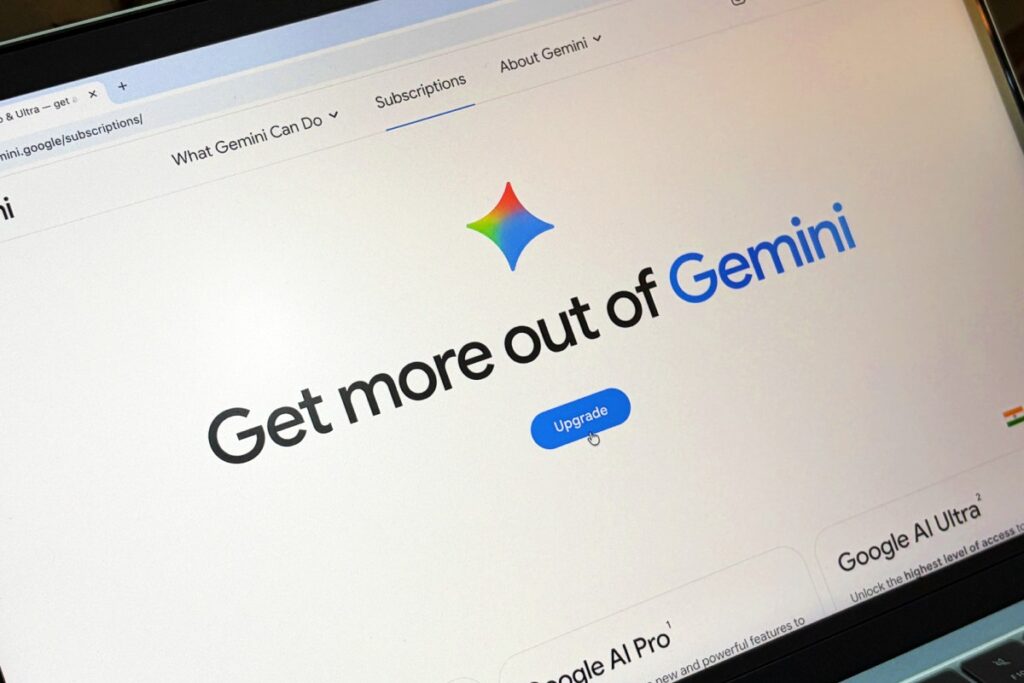
On Tuesday, Google unveiled Gemini 3, its latest and most advanced foundation model, now accessible through the Gemini app and AI search interface. The release arrives just seven months after Gemini 2.5, establishing it as Google’s most capable large language model (LLM) to date and positioning it as a formidable competitor against existing AI tools in the market. Notably, this launch occurs less than a week after OpenAI released GPT-5.1, and only two months following Anthropic’s introduction of Sonnet 4.5, underscoring the rapidly evolving landscape of frontier model development.
One distinguishing feature of Gemini 3 is its remarkable improvement in reasoning capabilities. Tulsee Doshi, Google’s head of product for the Gemini model, emphasized this leap, asserting that the model now responds with unprecedented depth and nuance. Evidence of these claims is found in independent benchmark results. With a record-high score of 37.4 on the Humanity’s Last Exam benchmark, Gemini 3 surpassed the previous high of 31.64 held by GPT-5 Pro. Additionally, it achieved the top position in user satisfaction on the LMArena benchmark, highlighting its practical applicability for end-users.
For small and medium-sized business (SMB) leaders and automation specialists, the release of Gemini 3 raises important questions about the tool’s strengths and weaknesses compared to established models like those offered by OpenAI and Anthropic. Particularly, users must consider the cost-effectiveness, return on investment (ROI), and scalability of these platforms.
Gemini 3 boasts several advantages. Its reasoning capabilities not only enhance the reliability of outputs but also facilitate complex decision-making processes that are crucial for SMBs aiming to optimize operations. The model’s integration into the Gemini app, which has reportedly garnered more than 650 million monthly active users, serves as a testament to its user adoption and potential for operational efficiency.
However, challenges remain. Despite Google’s expansive reach, businesses might question the robustness of Gemini’s datasets and whether they cover industry-specific needs as comprehensively as models like OpenAI’s GPT-5. Additionally, while Gemini 3 excels in theoretical reasoning capabilities, practical applications, including the ability to seamlessly integrate into existing workflows, will determine its utility for automation specialists.
On the other hand, OpenAI’s offerings continue to excel in generating high-quality content and creative outputs, though they have faced scrutiny regarding cognitive biases and the accuracy of information generated. Pricing for OpenAI’s models is relatively straightforward, although it necessitates an investment that may not always align with the budgets of SMBs. In contrast, Gemini 3’s pricing structure has yet to be fully disclosed, leaving potential users to hypothesize about costs.
Anthropic’s Sonnet models focus on ethical AI applications, often making them preferable for organizations emphasizing corporate responsibility. However, their reasoning and coding capabilities may not be as advanced as Gemini 3’s, especially when it comes to quick, intelligent decision-making. This trade-off necessitates that SMB leaders carefully analyze organizational priorities in selecting a platform.
The introduction of Gemini-powered Google Antigravity further complicates the competitive landscape. This coding interface allows for a multi-pane experience that combines a ChatGPT-style prompt window with traditional coding environments. This hybrid approach may appeal to automation specialists, permitting collaborative coding in a manner that traditional platforms such as Zapier or Make might not provide. Nevertheless, Antigravity’s effectiveness will depend largely on the learning curve required for adoption and whether existing workflows can be harmonized effectively with its capabilities.
In terms of scalability, all mentioned models, including Gemini 3, are designed to serve growing enterprises. Google has already positioned Gemini 3 to accommodate extensive user bases, with over 650 million monthly active users. As organizations grow, the challenge lies in adapting these AI tools to increasingly complex workflows. The integration of AI into business processes has proven to yield substantial ROI through increased efficiency and reduced labor costs, but SMBs must conduct thorough assessments on the adaptability and growth potential of each solution before making a commitment.
In conclusion, the launch of Gemini 3 has set a new standard in AI capabilities, particularly in reasoning. While its strengths position it as a viable option in an increasingly competitive market, leaders must conduct a nuanced comparison of Gemini 3 against OpenAI and Anthropic’s offerings, weighing the balance between cost, utility, and scalability in their unique contexts. As AI platforms continue to evolve, strategic investment in the right tool will be critical for optimizing operational efficiencies and fostering innovation in the SMB space.
FlowMind AI Insight: With the rapid advancements in AI models like Gemini 3, organizations must remain vigilant in assessing how these tools can augment their existing workflows to drive efficiency and innovation. Emphasizing scalability and integration will be essential for maximizing the benefits of these transformative technologies.
Original article: Read here
2025-11-18 08:00:00