
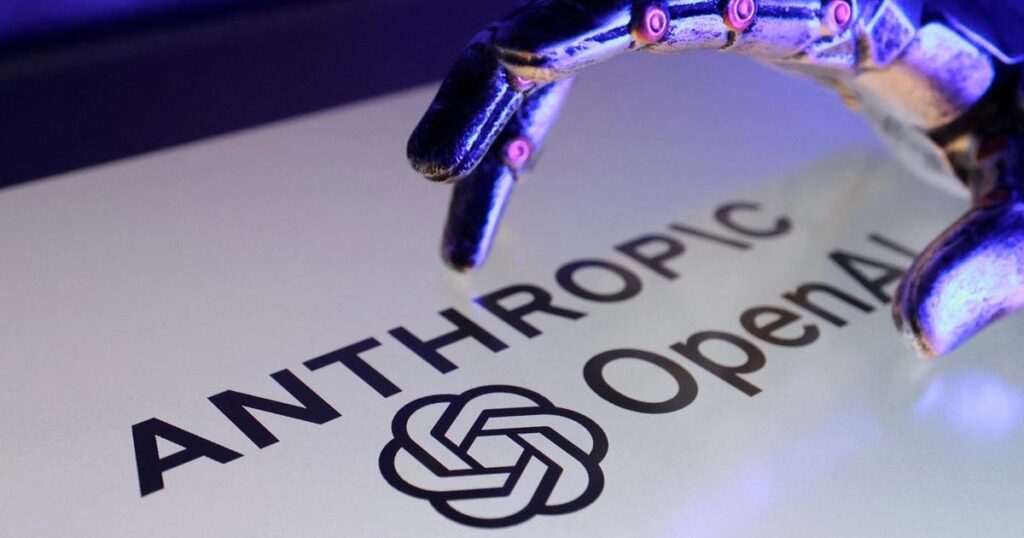
The recent tensions between Anthropic and the Trump administration, particularly regarding military applications of artificial intelligence, highlight critical dynamics within the evolving landscape of AI technologies. As AI becomes increasingly integral to various sectors, including defense, the contrasting approaches of key players such as Anthropic and OpenAI present a nuanced case study for leaders in small to medium-sized businesses (SMBs) and automation specialists.
Anthropic has positioned itself firmly against any use of its AI technology in military applications that could compromise its ethical guidelines, which notably prohibit surveillance and autonomous weaponry. This stance emerged following a lobbying effort against a provision in the “Big Beautiful Bill” that would have limited states’ abilities to regulate AI, signaling the firm’s prioritization of ethical considerations over potential government contracts. In contrast, OpenAI has demonstrated a more pragmatic approach. By allowing its models to be deployed under the Department of Defense’s Genai.mil initiative, OpenAI has managed to maintain a cooperative relationship with national security entities while also addressing the concerns of its workforce regarding military involvement.
The implications of these differing philosophies extend to the tools and platforms available for automation and AI-driven processes. On one side, OpenAI’s models, notably ChatGPT, have garnered a reputation for versatility, being adaptable for both civil and military applications. The strategic decision to allow limited collaboration with the Pentagon—under conditions that reflect ethical guidelines—has provided OpenAI with a competitive edge. This adaptability highlights a strength in navigating complex regulatory environments while maintaining a clear ethical framework, thus potentially increasing its ROI for organizations willing to utilize these sophisticated models within legal boundaries.
On the other hand, Anthropic, despite its ethical alignment, faces the challenge of scalability and market penetration, particularly given its focus on cybersecurity applications. While its models are among the few advanced tools available for classified operations, the emphasis on avoiding military applications could limit the scope of future contracts or partnerships. The decision to distance itself from potential military use may resonate with a certain segment of the market; however, it also risks alienating potential customers in industries where dual-use applications could yield significant benefits.
When assessing the costs associated with these platforms, it is essential to consider both the initial investment and the long-term operational implications. OpenAI’s collaboration with the Pentagon, illustrated by CEO Sam Altman’s announcement of deploying ChatGPT on classified networks, demonstrates a potential for scalability that could lead to enhanced ROI. This adaptability not only attracts government contracts but also fosters reliance on its technology in various commercial sectors, ultimately providing a substantial financial uplift.
Conversely, the potential hurdles for Anthropic are evident in its current predicament with the Pentagon, which has initiated a period of evaluation for alternatives while still utilizing Anthropic models. This dependence represents a critical juncture for the company. If Anthropic can successfully pivot and address the concerns that have arisen from its stringent ethical policies, it may discover new avenues for growth. However, the strategic choice to exclude certain applications may ultimately impact its ability to remain competitive in a market that increasingly favors flexibility and multifaceted utility.
Moreover, the ethical implications surrounding AI when juxtaposed with practical business needs pose a complex challenge for SMB leaders. Those seeking to implement AI solutions must weigh the trade-offs between ethical obligations and practical applications. For leaders evaluating AI and automation platforms, it is critical to assess not only the technology’s capabilities but also the vendor’s alignment with their own corporate values—an alignment that can affect employee buy-in and customer perception.
As SMBs navigate these considerations, it may be prudent to align with partners that can demonstrate both ethical commitment and operational flexibility. Companies should prioritize platforms that not only understand the intricacies of their industries but also possess the agility to adapt to regulatory changes and stakeholder expectations.
In conclusion, while Anthropic and OpenAI illustrate contrasting paths in the realm of AI technology and military application, their journeys serve as vital lessons for SMB leaders and automation specialists. These enterprises must carefully analyze the strengths, weaknesses, and potential long-term impacts of their choices in vendor partnerships. The delicate balance between ethical concerns and practical business applications will continue to shape the landscape of AI and automation, informing critical decisions that drive future growth and innovation.
FlowMind AI Insight: The current developments between Anthropic and OpenAI underline an essential truth for SMB leaders: the ability to navigate complex regulatory environments while maintaining ethical integrity is not just a moral imperative but a strategic advantage in securing growth opportunities in the ever-evolving landscape of AI technology. Recognizing the dual necessity for ethics and adaptability can position organizations for sustainable success.
Original article: Read here
2026-02-28 04:27:00