
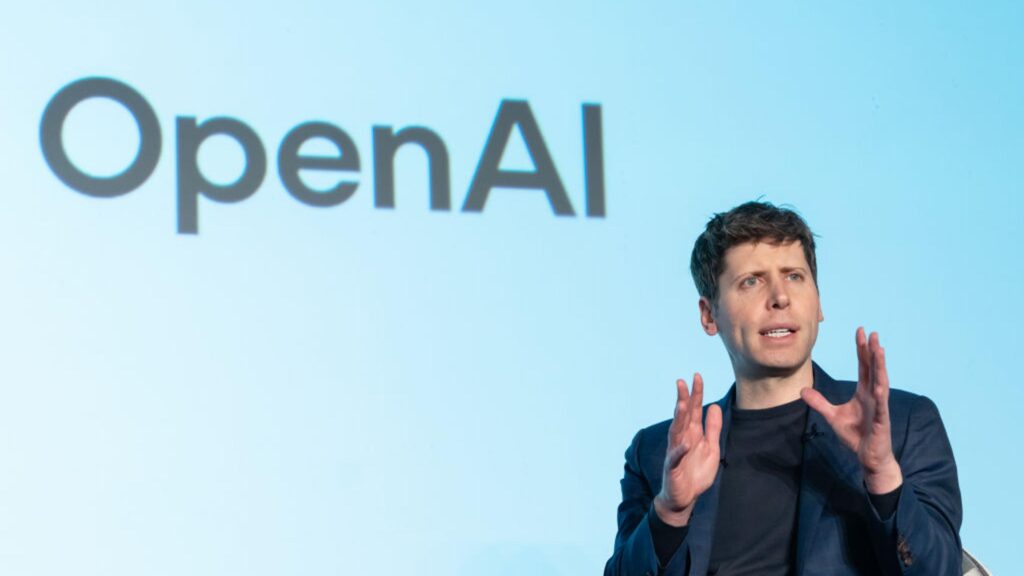
OpenAI’s recent release concerning the philosophy and mechanics behind its Model Spec is a pivotal moment in understanding how AI, particularly ChatGPT, will evolve to meet societal needs while balancing conflicting imperatives. The Model Spec serves as a foundational document that outlines the ethical and operational frameworks guiding the behavior of ChatGPT. Its transparency allows stakeholders—including researchers, policymakers, and end-users—to inspect and debate the underlying principles shaping AI interactions, which is crucial in an era where automation and AI are rapidly embedding themselves into various facets of business and daily life.
The Model Spec is envisaged as an “interface” that articulates the intended behavior of ChatGPT, establishing a clear set of guidelines on how the model should respond to user prompts while aligning with broader social responsibilities. In essence, it institutionalizes a framework for decision-making, where obligations to societal well-being may take precedence over other directives from developers or end-users. This hierarchical approach is significant; it not only mitigates risks associated with high-severity harms but also enshrines ethical considerations at the core of AI functionality.
For SMB leaders and automation specialists, the insights drawn from OpenAI’s strides in elucidating its Model Spec can serve as a benchmark for evaluating other AI and automation tools in the market. For instance, when comparing platforms like Make and Zapier, considerations such as scalability, integration capabilities, and cost-effectiveness are paramount. Make offers an extensive suite of automation features conducive to complex workflows, appealing to users who require tailored solutions. In contrast, Zapier’s user-friendliness and extensive app integration make it an attractive option for SMBs looking to streamline simple tasks quickly without deep technical involvement. Each platform has its strengths; however, the choice ultimately hinges on specific business needs and the desired level of complexity in automation.
Similarly, the competition between OpenAI and Anthropic—a competitor also focused on ethical AI development—highlights a critical dichotomy in today’s AI landscape. OpenAI’s extensive resources and substantial dataset access lend it a competitive edge in developing advanced models with broad-ranging capabilities. Conversely, Anthropic focuses heavily on AI safety and interpretability, lending itself to businesses that prioritize ethical dimensions as integral to their operational ethos. This variance in approach serves as a reminder that the most suitable platform will align not only with the operational goals of an organization but also with its ethical values.
Financial considerations are equally important in evaluating these solutions. Understanding the ROI of deploying AI tools involves examining upfront costs, recurring subscription fees, and potential productivity gains. While platforms like OpenAI may command higher initial investment, their potential for driving efficiencies and operational excellence can yield substantial long-term returns. SMB leaders should consider conducting cost-benefit analyses to assess how these technologies can affect their bottom line, specifically in terms of improved productivity, reduced error rates, and enhanced customer experiences.
Moreover, as businesses scale, the ability to integrate more complex AI solutions becomes critical. High scalability ensures that as organizational needs evolve, the chosen platforms can accommodate growth without necessitating complete overhauls or extensive retraining. As such, platforms that offer modularity or adaptive learning capabilities may provide more future-proofing compared to static solutions.
As businesses navigate the ever-evolving technology landscape, the key takeaways presented by OpenAI’s Model Spec resonate across various sectors. First, the imperative for transparency and ethical considerations in AI deployment cannot be overstated, setting a standard for competitors. Second, leaders should prioritize platforms that align operational needs with ethical imperatives, ensuring that the technology they adopt does not merely serve immediate needs but also cultivates trust among users and stakeholders. Lastly, conducting detailed analyses regarding the costs, potential ROI, and scalability of different automation solutions enables informed decision-making and positions organizations to maximize value from their investments.
In summary, OpenAI’s Model Spec serves as a model for how transparency and ethical governance can be embedded in AI solutions, offering a benchmark for other platforms amidst a competitive landscape. As automation technologies continue to evolve, clarity in operational frameworks will drive better outcomes for businesses, ultimately fostering a technology ecosystem that prioritizes both efficiency and ethics.
FlowMind AI Insight: As businesses increasingly adopt AI and automation tools, the emphasis on ethical frameworks—like OpenAI’s Model Spec—will become a defining factor in the selection process. Leaders would do well to prioritize transparency and scalability, aligning their technological investments with not only operational imperatives but also long-term ethical commitments for sustained success in a fast-evolving market.
Original article: Read here
2026-03-25 17:05:00