
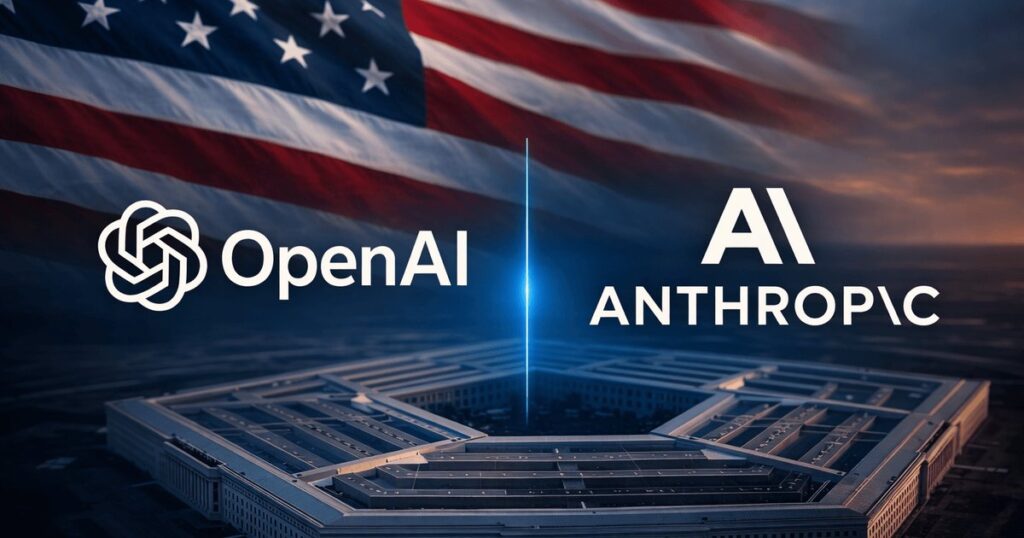
The recent tumult in the artificial intelligence landscape, particularly surrounding the government feud involving OpenAI and its flagship product ChatGPT, has prompted a significant shift among businesses focusing on automation and AI deployments. As user sentiment gravitates towards alternatives like Claude by Anthropic, the implications for Small and Medium-sized Business (SMB) leaders and automation specialists are profound. This article aims to dissect the strengths, weaknesses, costs, ROI, and scalability of these platforms to provide insights into the evolving AI ecosystem.
Initially, it is critical to highlight the backdrop of heightened user preferences showcased by the drastic rise of Claude, which recently surged to the top of App Store charts in the US and UK, largely at the expense of OpenAI’s ChatGPT. The discontent surrounding ChatGPT’s association with government surveillance initiatives has catalyzed user migration. Many users felt a disillusionment spurred by ethical concerns, leading them to seek alternatives. This surge in Claude’s popularity was not merely a result of circumstantial fame; it served as a quintessential case study illustrating the impact of regulatory relations, public perceptions, and ethical considerations on AI adoption.
The strengths of Claude lie in its perceived commitment to privacy and responsible AI use. Claude emerged as a beacon of hope for users wary of government collaborations, ensuring a user-friendly experience underpinned by robust ethical guidelines. This is notably significant given the increasing demand for transparency within AI technologies. The irony, however, is that while Claude attracted users fleeing ChatGPT, several federal departments—including State, Treasury, and Health and Human Services—have opted for OpenAI’s GPT-4.1 for their in-house solutions. The State Department’s StateChat, which transitioned to OpenAI technology, underscores the significant institutional trust in OpenAI’s capabilities, yielding a dichotomy that needs further analysis.
From a cost perspective, both platforms present different value propositions. OpenAI’s pricing models typically revolve around API usage and subscription tiers, which may render it more expensive for high-consumption environments compared to Claude. However, the significant ROI attributed to OpenAI stems from its vast training dataset, advanced algorithms, and an expansive developer ecosystem that may justify the associated costs for businesses looking to implement state-of-the-art AI functionalities. By contrast, Claude, while potentially more economical in the short term, may lack the extensive integrations and features offered by OpenAI, raising questions about its scalability as user demands evolve.
When analyzing these platforms in terms of scalability, OpenAI has a distinct edge due to its proven infrastructure, making it well-suited for companies anticipating rapid growth or fluctuating AI demands. The API-first approach of OpenAI facilitates seamless scaling, allowing businesses to leverage its capabilities only when needed, thus optimizing operational expenses. Claude, while engaging with its users effectively on issues of privacy, may face challenges in scaling as rapidly or efficiently, particularly when competing with the entrenched resources and capabilities of OpenAI.
The crisis faced by OpenAI has made it apparent that ethical guidelines and public sentiment can play an instrumental role in shaping the competitive landscape. The additional language built into OpenAI’s agreements with government clients to enhance transparency reflects a recognition of the importance of trust and ethics in AI deployments. Such developments are crucial for SMBs considering the implementations of AI tools within their operations. Success hinges upon aligning with platforms that not only meet operational needs but also resonate ethically with user segments.
For SMB leaders contemplating the adoption of AI solutions, the lessons from the OpenAI and Claude contrast provide several actionable insights. First, organizations must carefully evaluate their ethical stance and choose partners whose values align with their own. The implications of public trust can significantly affect customer relationships and brand loyalty. Second, consider immediate return versus long-term scalability: While Claude might offer lower costs initially, the extensive capabilities and reliability of OpenAI could lead to greater profitability in the medium to long term. Third, a robust change management plan will be essential when transitioning to new technologies to ease user apprehensions and maximize adoption rates.
FlowMind AI Insight: As the AI landscape continues to evolve, the choice between platforms like OpenAI and Claude will largely depend on an organization’s values, needs, and growth strategies. Businesses must not only focus on the technical capabilities of AI solutions but also consider the ethical implications and public perceptions that may significantly drive user preferences and trust. In this dynamic environment, strategic choices will be the linchpin of successful AI deployment.
Original article: Read here
2026-03-09 10:55:00