
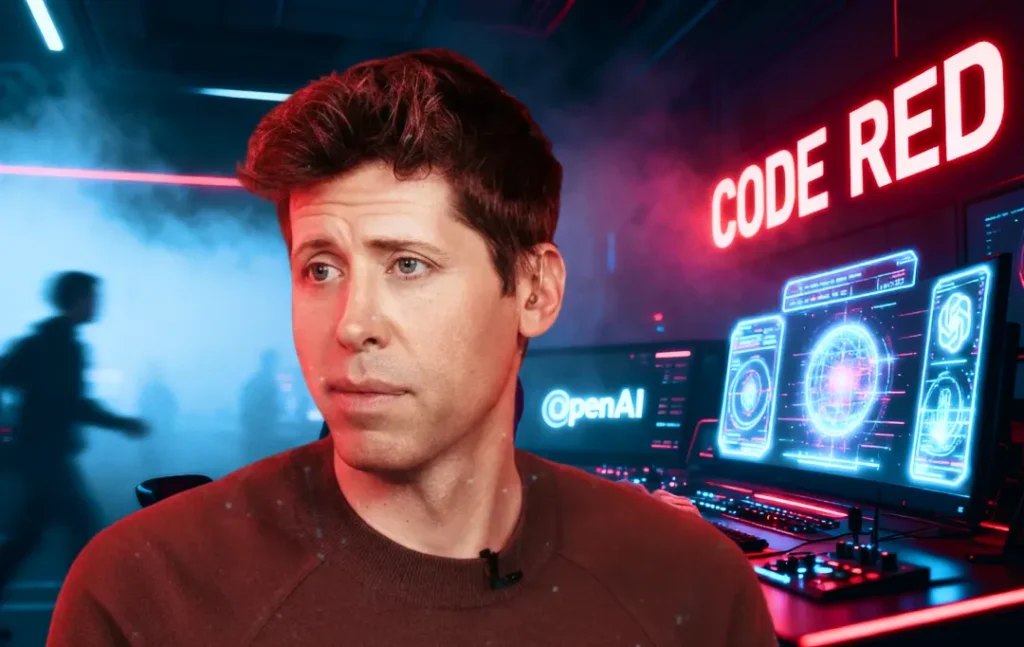
OpenAI has recently shifted its strategic focus under CEO Sam Altman, moving from an expansive growth trajectory towards a more cautious operational stance. This transformation is particularly pronounced in light of Google’s Gemini 3 entering a phase of accelerated development and market penetration. The core of OpenAI’s new approach involves freezing several non-essential projects and reassigning resources to enhance ChatGPT and a new model, Garlic, which is poised to compete head-on with Google’s latest offerings as well as Anthropic’s Claude Opus 4.5.
Internally reported memos indicate a significant pivot, with OpenAI delaying ambitious initiatives such as advertising, health agents, and personal assistants in favor of bolstering its flagship product, ChatGPT. This emphasis on core enhancements—specifically around speed, reliability, and personalization—hints at both a recognition of ChatGPT’s market position and an acknowledgment of a challenging economic environment. OpenAI remains unprofitable despite a lofty estimated valuation of around $500 billion, and projections indicate that substantial revenue increases are essential for achieving profitability targets by 2030.
Furthermore, OpenAI is facing fierce competition from Google, whose Gemini 3 model appears to be narrowing the gap significantly. Google’s models are achieving impressive results on various AI benchmarks and are already embedded within the Google ecosystem, enhancing user engagement across platforms such as Google Search and Workspace tools. This competitive edge has translated into substantial growth for Gemini, with reported monthly active users surging from 450 million to approximately 650 million in just a few months, even as ChatGPT commands an impressive user base of around 800 million weekly users.
The competitive landscape has shifted dramatically since 2022, when Google declared a “code red” in response to ChatGPT’s launch. Now the roles have reversed, placing OpenAI in a reactive position as it reevaluates its strategies and investments. The critical question for leadership now is whether OpenAI’s significant investments in infrastructure, projected at up to $1.4 trillion by 2033, can effectively bolster its competitive position. The company is reportedly aiming for $200 billion in annual revenue to meet its profitability goals—an ambitious target that will require not only technological advancement but also robust market adoption.
Amidst these challenges, OpenAI is developing Garlic, a new large language model touted for its performance in coding and reasoning tests. Early assessments signal that Garlic could potentially surpass both Google’s and Anthropic’s offerings. The development of Garlic builds upon lessons learned from a previous internal project and focuses on optimizing pre-training processes, delivering advanced capabilities in a more efficient package. OpenAI has expressed confidence in Garlic’s ability to reset the competitive narrative within the AI landscape—a necessary step given current market dynamics.
In comparing AI and automation platforms, such as those represented by OpenAI and Anthropic, several factors warrant careful consideration. The strengths of OpenAI lie in its continual innovation and adaptability, essential traits in a rapidly evolving market. OpenAI’s tools are broad in application, offering versatility across industries, which can translate into strong ROI for users who invest in their platforms.
On the other hand, Anthropic’s offerings may appeal to users looking for a more targeted or specialized approach. While OpenAI’s platforms tend to excel in generic tasks, Anthropic may provide a deeper dive into specific applications, thereby catering to niche markets. The cost of utilizing these platforms is another critical aspect; users must weigh the potential subscription costs against the expected benefits in efficiency and productivity gains.
When considering scalability, OpenAI demonstrates an edge with its established presence and widespread integration in various applications. Scalability remains a vital consideration for SMB leaders seeking tools that can grow alongside their organizations. As the landscape evolves, Flexi, a new contender, promises to integrate automation capabilities seamlessly, allowing for real-time task execution and enhancing operational efficiency—a necessity for organizations intent on leveraging automation.
Given the current indicators, SMB leaders and automation specialists should consider the following recommendations. Prioritize investments in proven platforms that demonstrate flexibility and adaptability; OpenAI remains a strong option, yet watch for emerging competitors that might offer more tailored solutions. Focus on platforms that enhance user efficacy while integrating smoothly into existing workflows, as this will enhance both operational efficiency and user satisfaction. Lastly, maintain a keen eye on future developments in AI technologies that might shift market positions; agility will be crucial as new entrants and innovations emerge.
In conclusion, as OpenAI navigates this pivotal moment, attention should be given not only to its internal developments but also to the broader implications of competition in the AI space. The ability to innovate while simultaneously addressing operational and economic headwinds will determine the company’s trajectory in a fast-paced technological environment.
FlowMind AI Insight: In the face of evolving competition, SMB leaders should evaluate the strengths and weaknesses of emerging and established AI platforms strategically. Emphasizing adaptability and user engagement will be key to capitalizing on the potential of AI and automation technologies in the coming years.
Original article: Read here
2025-12-03 09:16:00