
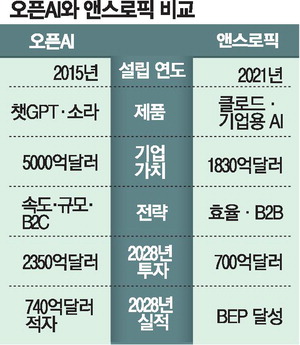
OpenAI and Anthropic are two intellectual powerhouses leading the artificial intelligence market, yet their strategies diverge substantially. As they navigate their respective AI ecosystems, it becomes crucial for leaders and automation specialists in small and medium-sized businesses (SMBs) to comprehend the implications of these differing approaches. A comparative analysis reveals insights into strengths, weaknesses, costs, return on investment (ROI), and scalability, illuminating pathways for effective adoption of these technologies.
OpenAI has emerged as a frontrunner, boasting an intense commitment to extensive infrastructure. The company announced a staggering investment of $235 billion by 2028, signaling its ambition to conquer high-cost segments, including video and image generation, as well as robotics. This heavy investment is indicative of a strategy that prioritizes speed and scale—qualities that resonate well in a business environment that increasingly demands rapid innovation and deployment capabilities. For SMBs aiming to incorporate or leverage advanced AI, this approach offers the potential for groundbreaking applications that push the boundaries of traditional automation.
However, such a focus on mega infrastructure comes with its own challenges. OpenAI’s plan to allocate over $40 billion specifically for securing backup server capacity illustrates the potential financial risks associated with an expansive offensive. The preparation for explosive demand must be weighed against the uncertainty inherent in high-capital investments. If the anticipated traction does not materialize—be it due to market volatility or shifts in consumer preferences—SMBs may find themselves stuck with underutilized resources and increased operational costs.
In contrast, Anthropic adopts a more measured approach, emphasizing efficiency and stability over sheer scale. With an expected investment of $70 billion over the same period, Anthropic is targeting a break-even point by 2028, leveraging its distinct focus on text-oriented AI applications such as coding and document writing. By honing in on these specific areas, Anthropic aims to minimize operational expenditures while maximizing revenue from its client base, primarily derived from corporate API contracts. This presents a significantly lower barrier to entry for SMBs that may wish to test AI capabilities without committing to the hefty investments required by OpenAI.
Anthropic’s strategy also includes a more diversified hardware approach, utilizing not only NVIDIA chips but also resources optimized for their specific tasks from tech giants like Google and Amazon. This adaptability may offer price stability and predictable supply chain management, which are paramount for organizations just beginning to explore AI tools. Conversely, OpenAI’s heavy dependence on NVIDIA raises concerns regarding potential supply chain vulnerabilities and cost fluctuations, which could significantly affect operational budgets for businesses relying on uninterrupted AI services.
While both platforms have clear advantages, the effective ROI for SMBs significantly depends on their specific use cases and strategic imperatives. OpenAI’s expansive breadth of functionalities may provide transformative solutions for businesses that demand comprehensive automation solutions that can process and analyze large datasets or creative media. However, for SMBs that seek more straightforward implementations of AI—such as generating text or automating routine tasks—Anthropic’s focused approach may yield quicker, more tangible benefits.
Scalability is another key factor to consider. OpenAI’s large-scale infrastructure enables the deployment of sophisticated solutions, but it also necessitates a more intricate integration process that may not be suitable for all organizations. On the other hand, Anthropic’s streamlined offerings allow smaller companies to implement solutions with quicker ramp-up times and lower operational risks. Thus, for SMBs, particularly those with minimal technical resources, Anthropic’s model seems to present a more attractive option, providing room for gradual expansion without the fear of overwhelming initial costs.
However, an important takeaway for leaders is that neither option is universally superior; the choice ultimately hinges on individual business contexts. Budget constraints, project scopes, and operational expertise should guide the decision-making process. Engaging in pilot programs with varying platforms could provide the necessary insights to ascertain what truly aligns with a company’s objectives.
As the AI landscape continues to evolve rapidly, companies must remain agile and adaptable to leverage the advancements in this domain fully. Investing in AI is not solely a question of capital expense but also a strategic decision that affects the core of organizational capabilities. Hence, SMB leaders should rigorously evaluate potential AI partners, keeping in mind their long-term goals and adaptability.
FlowMind AI Insight: As SMBs embark on their AI journeys, leaders should carefully assess both OpenAI and Anthropic not merely as product offerings but as strategic partners that will shape their operational landscapes. A tailored approach, considering both immediate needs and future scalability, will position them favorably in the competitive market.
Original article: Read here
2025-11-12 08:23:00