
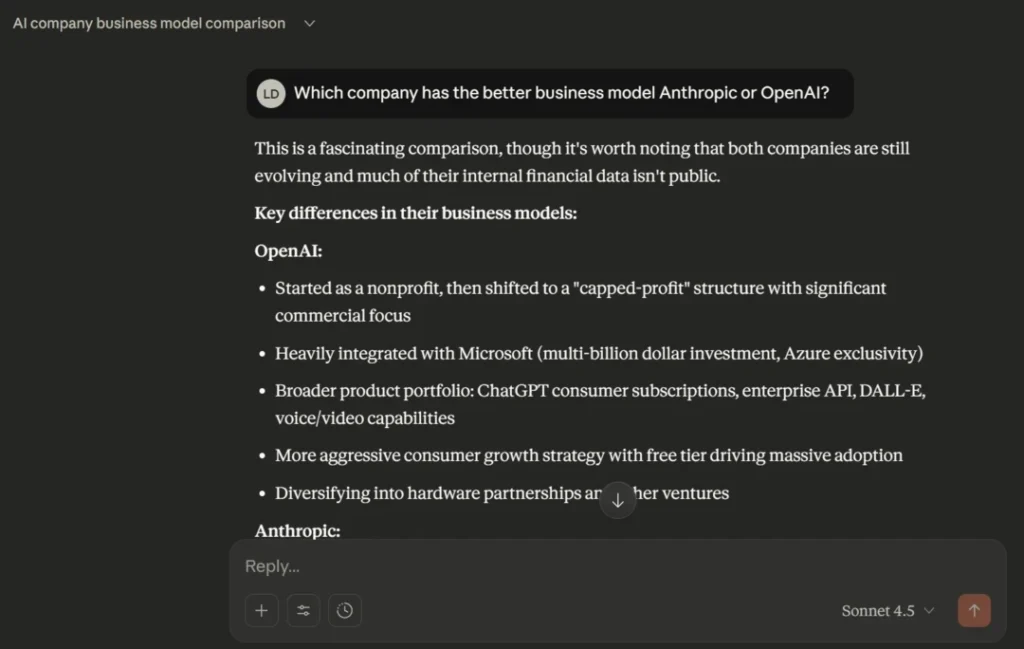
In the rapidly evolving landscape of artificial intelligence and automation, OpenAI and Anthropic have emerged as two prominent competitors, particularly with their respective language models: OpenAI’s ChatGPT and Anthropic’s Claude. Historically, these organizations have been viewed through a similar lens; however, recent developments suggest they are charting distinct paths. OpenAI’s orientation appears consumer-focused, influenced by a desire to emulate the success of giants like Google and Apple. In contrast, Anthropic is positioning itself as an enterprise-centered provider, suggesting Claude is tailored more for professional applications.
OpenAI is heavily investing in infrastructure, relying on hyperscalers to enhance its capacity and capabilities, while Anthropic has opted to leverage established platforms such as AWS and Google Cloud. This decision reflects a strategic pivot toward cost management and operational efficiency, especially in an environment where demand for scalable AI solutions is growing. The contrasting strategies of these companies prompt a deeper analysis of their strengths, weaknesses, costs, return on investment (ROI), and scalability, providing business leaders and automation specialists with vital insights.
OpenAI’s transitional strategy might be characterized as ambitious, albeit risky. By broadening its target demographic to include a wider array of consumer applications, OpenAI seeks to tap into various markets, thus maximizing its user base. However, this ambition comes with challenges. The diversification into “not safe for work” content has sparked debates regarding ethical implications and potential backlash, which could alienate a segment of its audience. Moreover, reliance on hyperscalers for infrastructure can escalate costs over time, potentially making the platform financially unsustainable for small to medium-sized businesses (SMBs) that typically seek cost-effective solutions.
Contrastingly, Anthropic’s affinity for a more enterprise-level focus suggests that it is banking on creating deeper, more lasting relationships with organizations that require tailored solutions. This positions Claude as a robust engine for workplaces seeking to integrate advanced AI solutions into their operations. By working with established cloud providers, Anthropic not only reduces overhead but also enhances its scalability; organizations can seamlessly adopt Claude without the burden of significant upfront investment. Furthermore, the potential ROI appears promising, particularly for SMBs that often prioritize efficiency and effectiveness over extensive capabilities.
Examining the costs associated with both platforms reveals distinct patterns. While OpenAI’s strategy to diversify and expand may offer short-term growth, its operational costs could deter SMB engagement. Conversely, Anthropic’s model, which focuses more on enterprise relationships, can be more financially accessible for organizations looking to integrate AI without the burden of transitional costs.
In terms of scalability, Anthropic’s cloud-centric approach provides a solid framework for growth. As businesses expand, they can continue to leverage Claude’s capabilities without having to make substantial structural investments. OpenAI’s model, while ambitious, may face hurdles in terms of scaling operations effectively, especially if its existing infrastructure cannot keep pace with growth in user demand.
The comparative evaluations of these two platforms yield clear takeaways for SMB leaders and automation specialists. OpenAI’s broad approach necessitates careful consideration of ethical implications and long-term sustainability. In contrast, Anthropic’s focused enterprise strategy supports clearer ROI projections and a more manageable scalability pathway. Investment decisions should hinge on organizational size, budget, and specific application needs.
The question remains whether OpenAI’s approach will pay off in the long run or if it risks becoming a victim of its own expansion ambitions. Meanwhile, Anthropic’s focused strategy may offer the resilience required to thrive in the competitive AI landscape, particularly as it continues to adapt to the needs of its clientele.
In conclusion, understanding the nuances between OpenAI and Anthropic can empower SMB leaders and automation specialists to make informed decisions regarding AI and automation platform investments. The landscape is constantly evolving, and staying abreast of these developments will be paramount in navigating these complex technologies effectively.
FlowMind AI Insight: As the AI landscape continues to evolve, it is crucial for SMBs to prioritize not only the immediate needs for automation and efficiency but also the long-term sustainability of their technology investments. Adopting solutions that align with specific organizational goals will yield better returns and foster resilience in a competitive market.
Original article: Read here
2025-10-26 07:00:00