
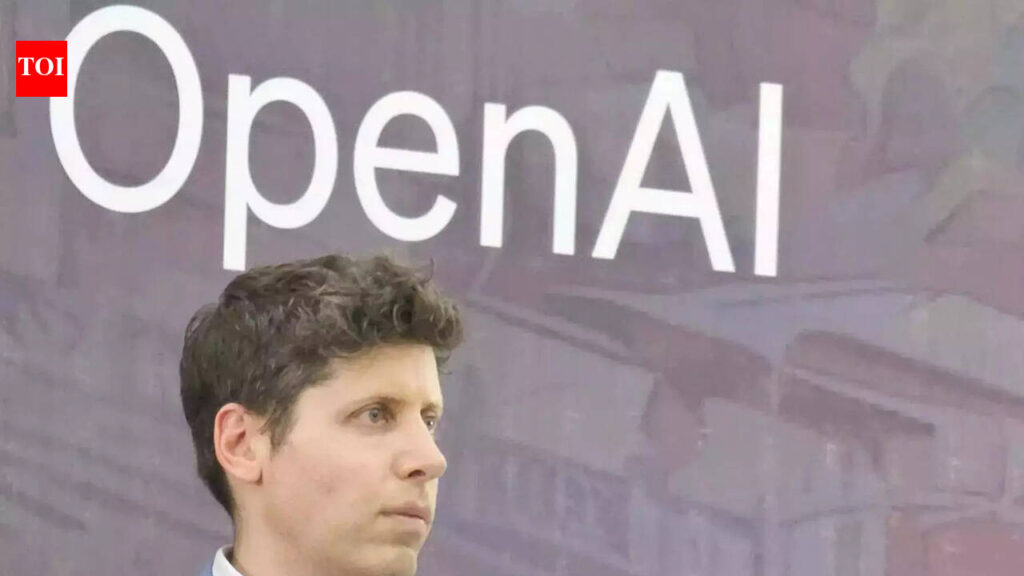
The rivalry between OpenAI and Anthropic reflects broader competitive dynamics within the artificial intelligence (AI) landscape, particularly in relation to their recent engagements with the U.S. Department of Defense (DoD) and associated government authorities. This conflict underscores the various strategic approaches adopted by these companies regarding compliance with governmental oversight, ethical AI deployment, and the balance of power between private enterprises and state actors.
OpenAI’s CEO, Sam Altman, has emphasized the importance of keeping government entities dominant over private corporations. This perspective is significant, particularly as governmental scrutiny of AI technologies intensifies. At a recent conference, Altman reiterated that companies should not abandon democratic principles even when faced with opposing political ideologies. His assertion stems from the need for a responsible approach in navigating the burgeoning influence of AI in sensitive domains such as national security.
Contrasting OpenAI’s approach, Anthropic, led by CEO Dario Amodei, has publicly critiqued Altman’s relationships with the current administration, implying a disconnect between OpenAI’s strategy and ethical considerations. Amodei’s critiques revolve around OpenAI’s contract with the DoD, which he labeled a “safety threat.” This disagreement is particularly pertinent when viewed through the lens of corporate ethics in AI applications. Anthropic’s resistance to certain governmental terms—specifically regarding the use of its technology for mass surveillance or autonomous weaponry—illustrates a conscious effort to maintain ethical standards over immediate market advantages.
Anthropic’s recent failure to secure an agreement with the DoD revolves around the insistence on safeguards that would prevent misuse of its AI capabilities. Despite already holding a substantial military contract valued at $200 million, Anthropic opted to prioritize ethical constraints over expanded access. The inability to align with DoD’s demands highlights a crucial risk for companies that are willing to compromise ethical principles for the sake of growth. Conversely, OpenAI’s swift engagement with the DoD—despite Altman’s own admission that the timing appeared “opportunistic and sloppy”—suggests a focus on seizing immediate opportunities regardless of future repercussions.
From a business perspective, the financial implications of these strategies cannot be ignored. OpenAI recently secured a funding round that pushed its valuation to an impressive $730 billion. This qualitative milestone signifies confidence from investors regarding OpenAI’s capacity for scalable AI solutions, driven in part by the popularity and utility of products like ChatGPT. With ChatGPT exceeding an astounding 900 million weekly active users, OpenAI demonstrates that rapid growth can occur even within an ethical quandary if measured primarily by market demand.
In contrast, Anthropic has successfully achieved a $19 billion annual revenue run rate, illustrating significant business growth despite a more measured approach to government contracts and ethical implications of technology use. The emphasis on responsible governance could serve to build long-term brand loyalty that transcends immediate revenue. However, this approach also risks alienating potential clients who may prioritize rapid deployment and cost-effectiveness over values.
When comparing the strengths and weaknesses of these two firms, it is imperative for leaders within small and medium businesses (SMBs) and automation specialists to look beyond immediate financial metrics. The contrasting strategies of OpenAI and Anthropic illustrate the varying impacts of corporate ethics on business development trajectories within the AI sector. While OpenAI may enjoy more immediate financial rewards through accelerated partnerships, Anthropic’s ethical focus not only aligns with eventual regulatory trends but may also cultivate a more dependable reputation among socially conscious consumers and decision-makers.
From a cost-benefit viewpoint, businesses contemplating partnerships or technological solutions with these firms must evaluate scalability and ROI alongside ethics. OpenAI offers rapid deployment capabilities paired with newfound revenues, yet the risks associated with government scrutiny and ethical violations pose potential long-term challenges. Anthropic may appeal more strongly to organizations prioritizing ethical stances, enhancing sustainable growth but potentially sacrificing speed.
In conclusion, as the AI landscape continues to evolve, SMB leaders and automation specialists should critically analyze the trade-offs presented by OpenAI and Anthropic. Understanding the nuances of scalability, ethical considerations, and government relations will be critical in determining which solution best aligns with an organization’s values and operational goals.
FlowMind AI Insight: In the race for AI dominance, companies must balance the allure of rapid revenue generation against the long-term benefits of maintaining ethical and responsible practices. As market demands evolve, the preference for ethical transparency may increasingly influence consumer choice, shaping the future trajectory of AI development.
Original article: Read here
2026-03-06 03:01:00