
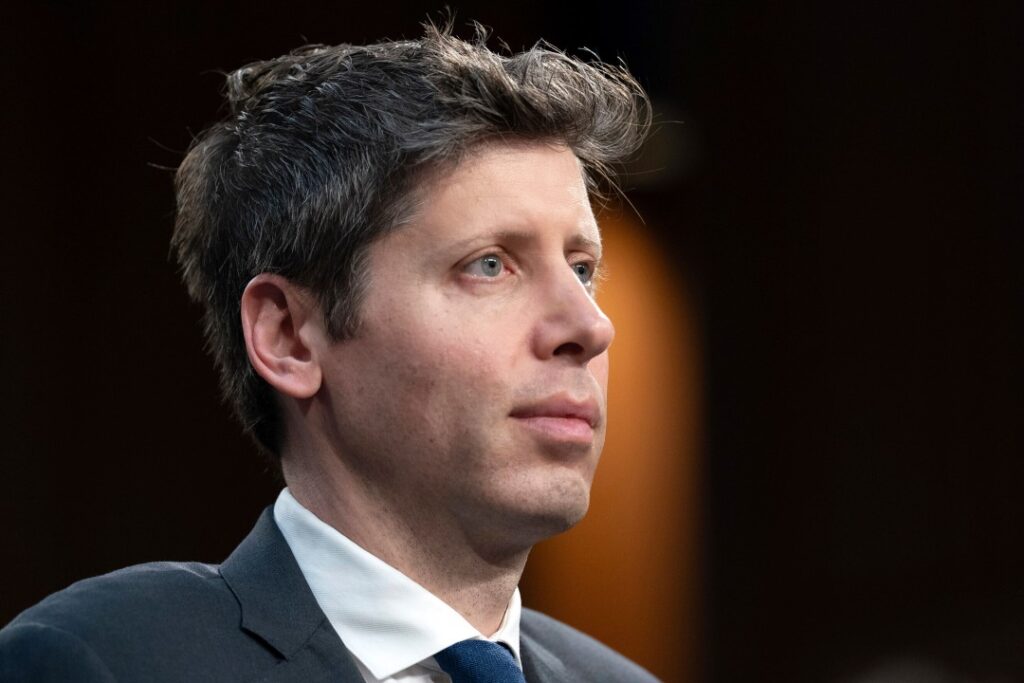
The intersection of artificial intelligence (AI) and national security has become a critical dialogue among technology firms and government agencies. Recently, Sam Altman, the CEO of OpenAI, has taken a prominent stance, positioning his company as a pivotal intermediary in discussions with the Pentagon regarding the application of AI in military contexts. In a memo shared with his staff, Altman outlined a cautious approach to these dialogues, emphasizing an unwavering stance against unregulated use cases such as domestic surveillance and autonomous offensive weapons. His concerns underscore the complexities inherent in merging private technological innovation with public safety and ethical considerations.
OpenAI’s discussions with the Defense Department include deploying its AI models in classified environments. However, the condition of strict oversight highlights a fundamental tension: the need for technological advancement must be balanced with safeguarding civil liberties and moral boundaries. The ongoing negotiations reflect a larger discourse surrounding who should dictate the terms of AI application in national security matters. Altman’s thoughts shed light on the imperative that government officials—not private enterprises—must lead in crafting policies when public safety is at stake. This presents a nuanced perspective, whereby collaboration with rival firms like Anthropic is seen as beneficial, provided the ultimate governance rests with democratic processes.
As these conversations unfold, the operational strategies of companies like OpenAI, Anthropic, and Elon Musk’s xAi emerge as essential focal points. OpenAI proposes implementing technical guardrails to ensure compliance with its restrictions, by keeping models in a cloud environment and sending personnel to work alongside governmental teams. This approach not only aims to instill confidence within the Defense Department but also serves as a demonstrative framework that other AI organizations could mimic. Such strategies could cultivate an environment of trust—a vital commodity for both private firms and public institutions. On the other hand, Anthropic’s rejection of Pentagon demands for “all lawful uses” of its technology starkly contrasts OpenAI’s willingness to engage under specific conditions. The divergence in strategies raises questions about the long-term implications for the firms involved.
The landscape is further complicated by varying perspectives on the Defense Department’s approach to AI integration. Retired Air Force Lt. Gen. Jack Shanahan’s critique of the Pentagon’s stance towards Anthropic exemplifies broader concerns: aggressively targeting one firm may not serve the industry or national security interests. His assertion that such a strategy paints a “bullseye” on Anthropic underscores the concern that headlines may overshadow constructive dialogue essential for meaningful progress. This gap between aggressive postures and collaborative efforts must be carefully navigated to foster an environment where innovation complements regulatory frameworks.
The contrasting strategies of OpenAI and Anthropic highlight important considerations for businesses in the automation and AI sectors. OpenAI’s willingness to collaborate with the military illustrates a significant potential for scalability, provided its terms and models are favorable. The company’s commitment to providing technical safeguards may offer a return on investment through enhanced credibility and expanded government contracts. Conversely, Anthropic’s more rigid position could limit its market presence in defense sectors, potentially stunting its scalability in a landscape where collaboration often breeds growth.
Additionally, any discussion of costs associated with integrating AI technologies must account for the resources necessary for compliance, training, and oversight. While OpenAI’s cloud-based model may entail higher initial investments, the long-term ROI could prove advantageous as governments may favor partnerships that prioritize ethical considerations and demonstrable safety. For SMB leaders, these insights advocate for a careful evaluation of AI tools that not only promise operational efficiency but also uphold rigorous ethical standards.
Moreover, the competition among AI firms reflects a broader trend where every innovation comes with an ethical obligation to consider societal ramifications. The pathways forward for AI will necessitate a shared commitment to transparency and accountability from tech firms and regulatory bodies alike. As these conversations progress, a careful analysis of partnership dynamics will become increasingly vital in shaping frameworks that govern AI applications without curtailing innovation.
In conclusion, the current discourse around OpenAI, Anthropic, and their engagement with the Defense Department signifies a pivotal moment in the AI landscape. Technology firms must remain acutely aware of the context in which they operate, particularly amid national security discussions. The path forward will require balancing innovation with ethical considerations and stringent oversight to foster mutual benefits for public safety and technological advancement.
FlowMind AI Insight: The evolving relationship between AI companies and government agencies necessitates a strategic approach that prioritizes ethical considerations alongside technological growth. As firms reassess their operational frameworks, integrating ethical safeguards will be paramount for achieving scalable success and securing long-term partnerships in both public and private sectors.
Original article: Read here
2026-02-27 20:05:00