
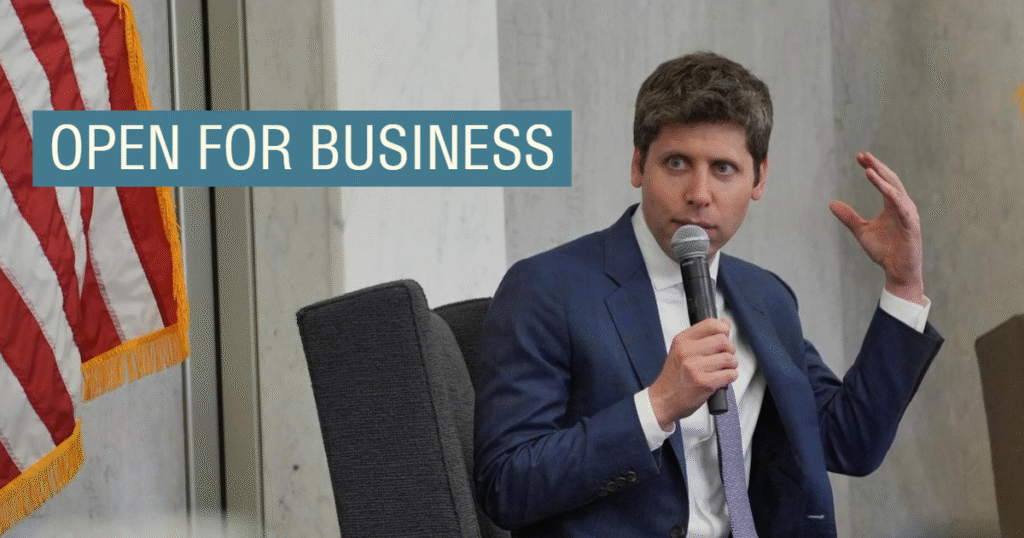
OpenAI has recently transitioned into a for-profit entity, a significant step that positions it for potential public listing in the foreseeable future. This move has notable ramifications, not just for OpenAI, but also for stakeholders in the broader artificial intelligence and automation landscape. The changing dynamics of such organizations compel SMB leaders and automation specialists to critically assess the competitive landscape surrounding AI capabilities and automation solutions, particularly as they evaluate the interplay of investment, innovation, and scalability.
The restructured entity mirrors a corporate form that aims to harmonize profitability with public accountability, distinguishing itself as a public benefit corporation. This evolution partly stems from the pressure to deliver shareholder value while fostering innovation for societal benefits, a dual mandate that captures the complex nature of contemporary AI enterprises. The shift also reinvigorates the dialogue surrounding partnership synergies; for instance, Microsoft’s valuation exceeding $4 trillion underscores its pivotal role as a model for strategic alliances in technology.
As businesses consider their options in AI and automation, OpenAI’s positioning creates an interesting juxtaposition against emerging players like Anthropic and traditional automation solutions like Make and Zapier. At their core, the decision to adopt one platform over another hinges on several critical factors including strengths, weaknesses, costs, return on investment (ROI), and scalability.
The foundation of OpenAI’s offerings involves advanced natural language processing and machine learning capabilities that continue to impress with their versatility and cognitive adaptability. On the other hand, Anthropic presents a differentiated approach emphasizing AI safety and ethical considerations, which may appeal to organizations keen on aligning their automation strategies with responsible AI frameworks. The choice between these two can be distilled down to organizational risk tolerance and ethical considerations in AI utilization.
In terms of costs, OpenAI operates on a cloud-based service model, making its vast capabilities accessible without substantial infrastructure investments upfront. This model can be exceedingly attractive to SMBs looking to leverage AI without incurring prohibitive operating expenses. However, as functionality scales, associated costs may become a concern. Thus, organizations must not only assess initial expenditures but also project the long-term implications of sustained use.
Conversely, Anthropic’s architecture and commitment to safety may position it favorably for enterprises that prioritize risk management and regulatory compliance. While typically carrying higher initial costs due to its unique safety measures and compliance checks, the potential ROI from risk mitigation can justify these expenses. Choosing between these offerings may boil down to evaluating how much value an organization assigns to safety features compared to the breadth of capabilities.
When comparing automation tools like Make and Zapier, similar cost-benefit analyses emerge. Zapier, known for its ease of use and robust integration capabilities, offers organizations an almost instant avenue to workflow automation without needing extensive technical knowledge. However, its structure might not support the sophisticated requirements businesses face as they scale operations. The simplicity of Zapier does serve as a strong entry point for SMBs testing automation waters.
Meanwhile, Make’s offerings exhibit more complex workflow capabilities and customization options which, while demanding a steeper learning curve, can yield substantial efficiency gains for businesses willing to invest time into mastering the platform. The trade-off is between immediate utility and longer-term strategic advantage—organizations must consider whether they need quick wins or if they are ready to invest in deeper capabilities from the outset.
Scalability becomes essential as businesses grow. OpenAI’s recently introduced AI-powered research assistant symbolizes how scalable AI can integrate seamlessly into organizational processes, providing efficiencies that previously required human labor. The eventual rollout of such technologies promises not merely to optimize tasks but also to redefine roles within organizations. This sort of innovation could potentially permit smaller operations to compete effectively with larger counterparts, exemplifying how AI augments competitive equity.
In tandem with this, tools like Make and Zapier allow for scalable automation that can be adjusted in real-time to adapt to evolving business needs. Businesses should weigh their current operational scale against projected future requirements to ascertain the most fitting automation platform.
Ultimately, the choice between these various AI and automation tools requires a nuanced understanding of the organizational context, strategic goals, and resource availability. Effective decision-making hinges on aligning the selected technology with the organization’s vision, understanding both the immediate impacts and longer-term implications on cost structure and operational capability.
FlowMind AI Insight: The evolution of AI towards a for-profit model brings forth unique opportunities and challenges in a rapidly changing business landscape. Organizations must navigate these complexities thoughtfully, leveraging data-driven insights to make informed choices about AI and automation tools that align with their strategic objectives while maximizing ROI and scalability.
Original article: Read here
2025-10-28 22:58:00