
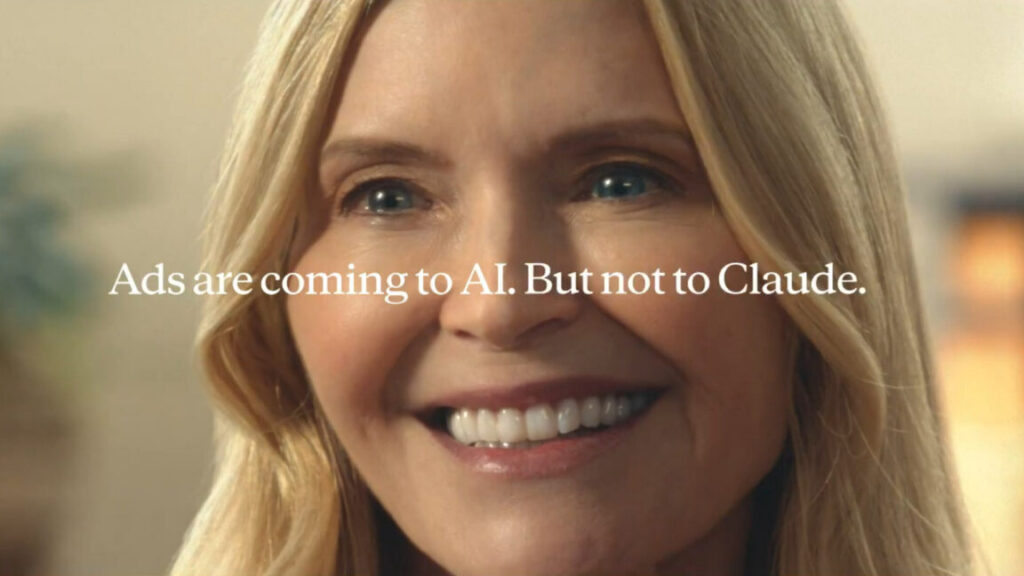
The recent spat between OpenAI and Anthropic serves as a critical juncture in the ongoing discourse about the monetization of artificial intelligence. OpenAI CEO Sam Altman and CMO Kate Rouch’s statements reveal a palpable tension as Anthropic embarks on an advertising campaign that directly challenges the monetization strategies of other AI companies. This confrontation not only illustrates the differences in strategic positioning in the AI landscape but also raises fundamental questions about the future of AI in business communications, particularly for small to medium-sized business (SMB) leaders and automation specialists.
Anthropic’s advertisements mock the inclusion of advertising within AI chatbot interactions, something that OpenAI has begun testing in ChatGPT’s lower-cost tier. The message in Anthropic’s campaign, which features unexpected product pitches during serious conversations, starkly contrasts with OpenAI’s commitment to transparency regarding ad placements. OpenAI has argued that any ads introduced will be clearly labeled and not influence the chatbot’s primary function in delivering responses. However, the nuance of these ad placements suggests a conversation-specific relevance that could lead to a more integrated approach to monetization compared to traditional static ads. This presents an opportunity for SMBs to analyze how AI tools can be effectively integrated into customer interactions while navigating potential distractions introduced by ads.
The underlying financial dynamics facing these companies provide insight into their strategies. OpenAI’s pressing need for revenue streams, driven by anticipated losses of around $9 billion amidst a $13 billion income projection, underscores its aggressive ad testing strategy. In comparison, Anthropic’s reliance on enterprise contracts rather than advertising indicates a more conservative and arguably sustainable approach to revenue generation. For SMB leaders, this distinction is essential in evaluating which tool might be better suited for their operational needs. The choice between these platforms could directly impact cost management, branding integrity, and ultimately ROI.
OpenAI’s extensive user base of approximately 800 million weekly users presents a clear scalability advantage. However, the challenge lies in converting this traffic into profitable subscriptions, given that only 5 percent are currently paying. This discrepancy highlights the potential inefficiency in scaling operations through user acquisition without effective conversion strategies. While Anthropic may lack a comparable user base, its focus on quality enterprise solutions could drive higher engagement and less churn among paying customers, reflecting a more sustainable growth trajectory. SMBs looking for long-term viability in their AI investments must weigh the benefits of volume against the depth of engagement that each platform offers.
Furthermore, the ease of use and integration capabilities of various AI platforms can significantly influence the decision-making process. Tools such as OpenAI’s ChatGPT may be seen as user-friendly due to its wide recognition and adaptability across various sectors. In contrast, Anthropic’s Claude focuses on a more refined user experience catering to specific business needs, leaning on its brand promise of an ad-free environment. Businesses must evaluate how each platform aligns with their operational goals, particularly in terms of ease of integration into existing workflows and the ability to scale operations without compromising user experience.
In exploring cost-effectiveness, it is essential for SMB leaders to understand the pricing structures associated with these platforms. OpenAI has introduced tiered subscriptions; however, as evidenced by their financial model, the long-term viability of free or low-cost offerings has created a dependency on ad revenue that may not align with the expectations of conscientious users. Conversely, Anthropic’s commitment to maintaining a no-ad environment underscores its focus on delivering value through quality rather than sheer volume, potentially resulting in more perceptive and discerning customer relationships.
In summary, the landscape of AI and automation platforms is rapidly evolving, influenced by competitive pressures and differing monetization strategies. SMBs are positioned uniquely to leverage these innovations, but mindful consideration of the platforms’ strengths and weaknesses will be pivotal. The ongoing discourse between leading players like OpenAI and Anthropic brims with lessons on brand positioning, customer engagement, and the multifaceted nature of revenue generation in the digital age.
FlowMind AI Insight: In a world where tech giants shape the future of automation, SMBs must critically assess the trade-offs between scalability and engagement in AI platforms. Careful consideration of cost, user experience, and long-term viability will determine their success in harnessing these innovative tools.
Original article: Read here
2026-02-05 17:46:00