
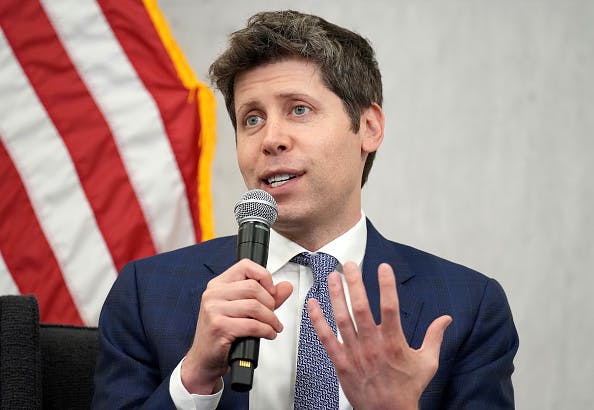
The recent developments in the AI landscape, particularly with the contentious relationship between Anthropic and the U.S. government, followed closely by OpenAI’s rapid entry into the same space, highlight significant industry dynamics that can influence both SMB leaders and automation specialists. The fallout from these events transcends mere corporate maneuvering; it encapsulates crucial discussions surrounding ethical AI use, privacy concerns, and strategic partnerships within the tech ecosystem.
OpenAI CEO Sam Altman’s internal communication revealed a degree of introspection regarding the deal struck with the Pentagon, pointing out both the rapid timeline and the optics of opportunism. The newly added provisions surrounding domestic surveillance underscore a growing awareness of privacy implications and compliance with established laws. This move indicates that, despite potential operational advantages, companies must tread cautiously and align their technologies with societal expectations and legal standards. One cannot ignore that the backdrop of this situation entails the acquisition of vast amounts of sensitive data, complicating the ethical landscape further. Herein lies a critical debate for SMB leaders: how to balance the efficiency of automation and AI while safeguarding customer privacy.
In comparing AI and automation platforms, OpenAI and Anthropic emerge as key players with distinctive offerings. OpenAI’s ChatGPT and Anthropic’s Claude are designed for different operational goals but share common underlying technologies. OpenAI has focused on enhancing user interaction and satisfaction through continuous learning models that refine responses based on input data. Its solutions typically offer a user-friendly interface that is appealing for quick integrations into existing workflows. However, the costs associated with OpenAI services can quickly escalate for SMBs as usage scales, especially when considering the use of high-complexity models for nuanced tasks.
On the other hand, Anthropic’s approach, steeped in a commitment to aligning AI with human intentions, emphasizes safety and reliability. Their models, designed with a focus on avoiding harmful outputs, may serve as a robust choice for SMBs prioritizing ethical AI deployment. However, the ongoing challenges surrounding governance and federal relationships may pose risks for long-term partnerships. Furthermore, the potential blacklisting scenario discussed in recent communications could have cascading effects on Anthropic’s current and future investment opportunities.
The scalability of both platforms also invites analysis. OpenAI’s extensive API offerings allow for seamless scaling, albeit with cost implications that require continuous assessment of ROI. Anthropic, though robust in its safety-driven approach, currently faces uncertainties that could limit its expansion capabilities in critical markets. This disparity in stability and cost structures must be weighed heavily by businesses considering long-term AI partnerships.
Another vital factor relates to the technical support and community engagement offered by these platforms. OpenAI benefits from numerous integrations and a vibrant community of developers who enhance its capabilities. This ecosystem fosters innovation but also introduces variability in the quality of outputs based on third-party modifications. Conversely, Anthropic’s newer position means it has been slower to develop a similar ecosystem, which might limit user accessibility to innovative applications and solutions.
Moreover, the assessments of each platform’s capabilities should not obscure the rising competition from automation tools like Make and Zapier. While OpenAI and Anthropic focus on AI development, tools such as Make and Zapier excel in streamlining workflows and automating repetitive tasks, significantly boosting productivity across teams. However, they often lack the deep analytic capabilities offered by advanced AI solutions, leading to the necessity for careful evaluation by leadership to identify where AI augmentation might yield higher efficiency versus what can effectively be automated through simpler solutions.
As business leaders tackle the integration of AI and automation technologies, it becomes increasingly clear that informed choices are paramount. A thorough understanding of not just the technological capabilities but also the ethical implications of AI use will be essential in navigating the modern workplace landscape. Businesses must scrutinize the balance between employing advanced AI technologies and adhering to compliance and privacy regulations, aligning commercial strategies with democratic values.
In conclusion, it is vital for SMB leaders and automation specialists to continually analyze the trade-offs between potential efficiency gains through advanced AI platforms and the infrastructural stability of these technologies, particularly against the backdrop of current geopolitical dynamics. Companies must develop frameworks for understanding not just the immediate return on investment, but also the strategic implications of AI adoption within ethical boundaries and partnership ecosystems.
FlowMind AI Insight: The rapid evolution of AI necessitates a dual focus on technical capabilities and ethical frameworks. As businesses embrace these technologies, prioritizing transparency and compliance will not only enhance customer trust but also foster sustainable growth in an increasingly complex marketplace.
Original article: Read here
2026-03-03 16:37:00