
In an era defined by rapid technological advancement, businesses increasingly prioritize the integration of artificial intelligence (AI) and automation tools to enhance operational efficiency and customer engagement. The recent innovation introduced by Parcelhero, a UK courier comparison platform, exemplifies this trend. By unveiling AI-powered features aimed at providing faster, round-the-clock assistance, Parcelhero underscores the transformative potential of these technologies for small to medium-sized business (SMB) leaders and automation specialists.
Parcelhero’s strategic shift towards AI-driven solutions manifests in several notable features. The launch of an AI-supported tracking system marks a significant development in logistics management. Unlike traditional tracking solutions, which often lag in real-time updates, Parcelhero’s offering promises instantaneous information flow. This advancement not only optimizes operational efficiency but also enhances customer satisfaction, as clients can access up-to-date shipment data with minimal effort.
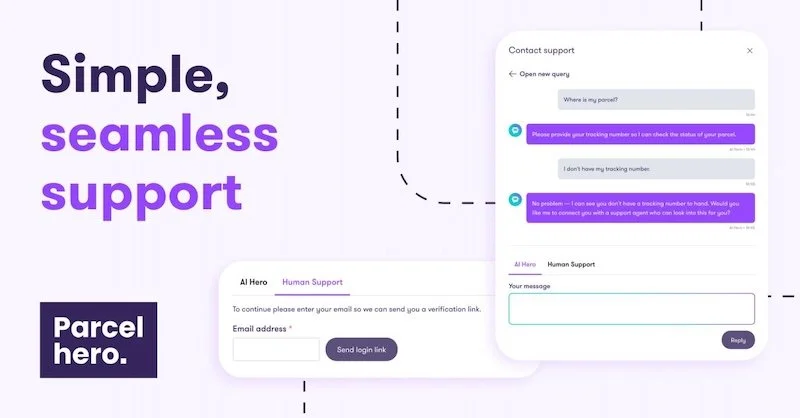
The introduction of an AI chatbot as the first line of customer inquiry represents another notable augmentation of Parcelhero’s platform. The chatbot can immediately resolve common queries and provide support at any hour, catering to users from varied geographic locations. This feature is particularly advantageous for SMB leaders, who often seek scalable solutions that can adapt to fluctuating demand without incurring additional operational costs. The agility of AI chatbots allows businesses to allocate human resources efficiently, focusing agents on more complex customer issues requiring nuanced understanding.
However, while the strengths of AI and automation tools are evident, one must consider their weaknesses as well. For instance, over-reliance on automated solutions may lead to customer frustration if users struggle to articulate their issues in a way that the chatbot can comprehend. Furthermore, the initial setup costs associated with sophisticated AI systems can present challenges, particularly for smaller businesses with limited budgets. This calls for a careful cost-benefit analysis to evaluate not only the direct financial implications but also the long-term returns on investment (ROI).
Parcelhero has opted to mitigate these potential pitfalls by integrating a seamless transition from the AI chatbot to live agents within the same chat window. This hybrid approach provides the best of both worlds—speed and efficiency from automation while ensuring that human empathy and expertise are available when needed. For SMBs, this flexibility is essential; it allows for personalized customer interactions without sacrificing the speed often associated with automated solutions.
The continuous improvement of Parcelhero’s ticketed support system is another strategic advantage. By centralizing customer interaction history—ranging from automated responses to follow-up communications—businesses can maximize their efficiency. This empowers customer support agents with the context necessary to address queries effectively, ultimately enhancing the customer experience. For SMB leaders, establishing a straightforward support system can reduce operational bottlenecks and generate loyalty among customers.
Moreover, the capacity for guest users and regular customers to access support without excessive redundancy reflects Parcelhero’s commitment to user-friendly design. Such adaptability is critical as businesses scale. Tools that accommodate varying levels of user engagement not only support customer retention but also facilitate business growth by fostering lasting relationships built on trust and reliability.
When comparing various automation platforms such as Zapier and Make, Parcelhero’s features offer compelling insights. Both Zapier and Make facilitate task automation across multiple applications; however, Make’s flexibility in creating more complex workflows may provide organizations with greater customization options. Conversely, Zapier’s user-friendly interface may appeal to SMBs looking for straightforward automation without a steep learning curve.
On the AI front, comparing solutions like OpenAI and Anthropic also provides valuable lessons. OpenAI’s models are designed for high scalability and versatile applications, making them suitable for organizations at various growth stages. However, Anthropic’s emphasis on aligning AI behavior with human intent can significantly enhance user experience, particularly in sensitive applications where ethical considerations are paramount.
In assessing ROI, companies must investigate the measurable impact of implementing these AI and automation tools. Improved response times, enhanced customer satisfaction, and reduced operational costs serve as key performance indicators. Research has shown that businesses leveraging AI for customer service can see reductions in response time by up to 90%, equating to substantial savings in labor costs and increased customer loyalty.
For strategic decision-makers, the analysis underscores the importance of integrating a diverse set of automation tools that align with organizational needs. Prioritizing user-friendly interfaces while ensuring robust features will likely result in more effective implementation and usage.
FlowMind AI Insight: As businesses increasingly adopt AI and automation technologies, the focus should not solely be on the tools themselves but also on the human aspect of service delivery. The most successful organizations will be those that blend advanced technology with genuine human interaction, ensuring a holistic approach to customer engagement and operational efficiency.
Original article: Read here
2026-04-08 05:49:00