
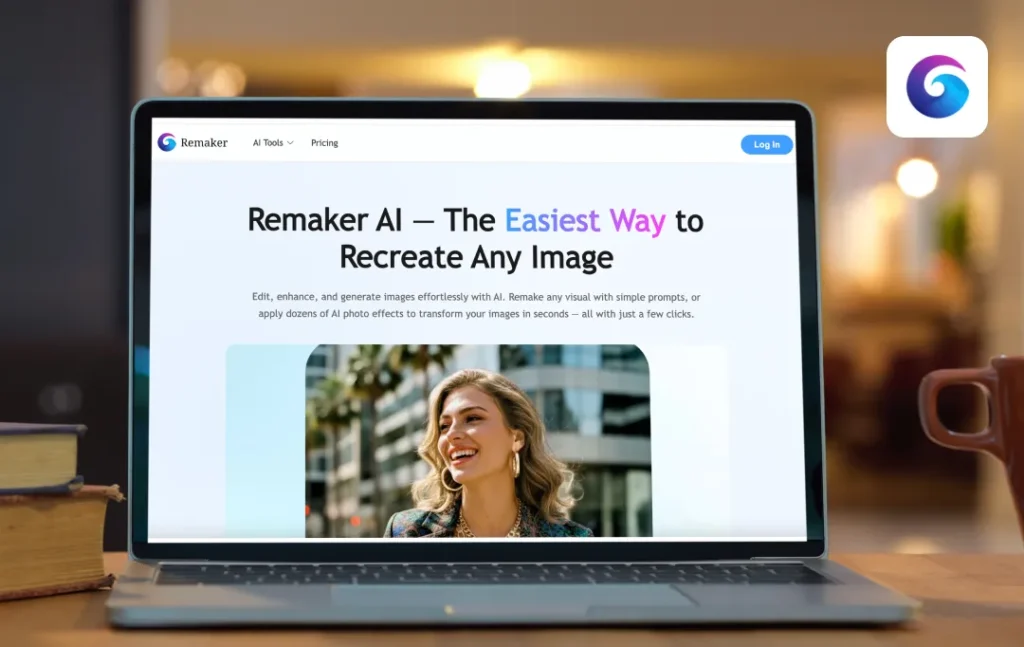
When small to medium-sized businesses (SMBs) explore automation tools, they encounter a myriad of options that can streamline operations and enhance productivity. Two notable contenders in this space are Remaker AI and Canva, each with specific strengths that cater to different business needs. By comparing features, reliability, pricing, integrations, and support, business leaders can make informed decisions about which tool best suits their operations.
Remaker AI is specifically designed for image enhancement, offering features like an AI image upscaler, unblur tool, enhancer, and face restoration. This tool stands out for its ability to elevate image quality while retaining artistic integrity. For instance, users can upload a low-resolution image and utilize the AI upscaling feature to enhance resolution without introducing heavy artifacts. This is particularly valuable for marketers needing appealing visuals quickly.
On the other hand, Canva provides a full suite of design capabilities, including templates for social media, presentations, and marketing materials. It allows users to create graphics from scratch or using pre-made templates, making it ideal for businesses that require a variety of visual content. Unlike Remaker AI, Canva offers features that are conducive to collaborative work, which is vital for teams that need to develop content together in real-time.
Reliability is a crucial factor. Remaker AI’s image processing can handle heavy loads without significant downtime, and it has proven effective in quickly enhancing images, saving users considerable time. Canva, known for its uptime and stability, ensures that users can access their designs at any time. However, it may experience slowdowns during peak usage hours, although these instances are rare.
Pricing is another critical point to consider. Remaker AI employs a credit-based system, allowing users to purchase credits without a subscription. This is advantageous for freelancers and small businesses that may only require occasional use, as unused credits do not expire. Conversely, Canva operates on a subscription model, offering both free and paid plans. The Pro version provides more features like brand kits and advanced export options, making it suitable for businesses that have regular design needs.
Integrations are vital in determining how well a tool fits into existing workflows. Remaker AI integrates seamlessly with various content management systems and image repositories. Canva, however, boasts an extensive range of integrations with platforms like Dropbox, Google Drive, and social media, making it an excellent choice for teams that rely on multiple tools for their marketing efforts.
In terms of support, both platforms provide resources, but they differ in approach. Remaker AI offers an extensive FAQ section and ticket-based support for more complex issues. Canva, meanwhile, provides chat support, which can resolve problems faster, along with a help center filled with tutorials for users looking to maximize their design potential.
One consideration for any tool implementation is how to migrate existing processes with minimal risk. For Remaker AI, businesses can start with a low-risk pilot by selecting a small set of images that require enhancement. After testing its capabilities, users can expand to larger projects. For Canva, organizations can create a few designs and gauge team collaboration before committing to a full subscription.
For both tools, assessing the total cost of ownership and expected ROI over three to six months is essential. Remaker AI’s pay-as-you-go model means that businesses can manage their spending more effectively, particularly in uncertain economic climates. After three to six months of productive use, businesses can expect a return on investment through improved visual quality in marketing materials, which can boost engagement and conversion rates.
Canva, with its higher upfront subscription cost, is likely to yield ROI through increased production efficiency, enabling teams to produce higher volumes of content quickly. In environments where visual assets are frequently required, the efficiency gain can be substantial.
In conclusion, the choice between Remaker AI and Canva will depend on specific business needs. Remaker AI excels in image enhancement, particularly for marketers and content creators seeking high-quality visuals without extensive editing skills. Canva, with its robust design toolkit, is ideal for teams needing collaborative capabilities and varied output types.
FlowMind AI Insight: The key for SMBs is to evaluate their unique requirements and workflows to select the tool that will integrate seamlessly into their operations, maximally enhancing productivity while minimizing unnecessary costs. Investing in the right tool can be a transformative step towards efficiency and effectiveness in today’s competitive landscape.
Original article: Read here
2025-12-04 06:17:00