
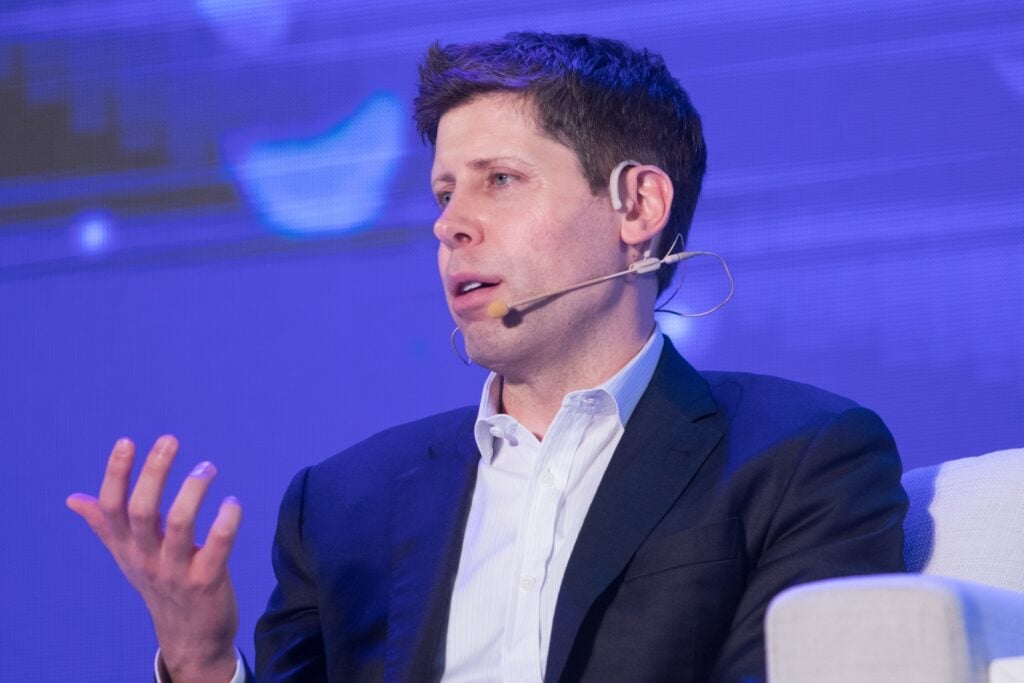
At the recent India AI Impact Summit held in New Delhi, a noteworthy interaction unfolded between industry titans Sam Altman, CEO of OpenAI, and Dario Amodei, CEO of Anthropic. Instead of opting for a conventional hand-holding gesture typically indicative of camaraderie, both leaders raised their fists, evoking intrigue and commentary across social media platforms. This moment transcended symbolic gestures, spotlighting the competitive dynamics at play in the artificial intelligence sector.
During the summit, which also featured eminent figures like Indian Prime Minister Narendra Modi and Sundar Pichai, CEO of Alphabet, Altman and Amodei took center stage as keynote speakers. Their choice to raise fists may appear minor but suggests deeper undercurrents of rivalry and divergent philosophies in the AI landscape. It is crucial, however, to contextualize this gesture against the broader backdrop of a growing competitive tension between their respective firms. Altman’s comments later that day expressed confusion about the public perception of their actions; this underscores the self-awareness among leading AI executives regarding the optics of their interactions and decisions.
Social media buzz soon ensued, with industry observers and commentators weighing in. Justine Moore from Andreessen Horowitz quipped about the discomfort in collaborating under competitive circumstances, while Siddharth Bhatia from Puch AI provocatively connected the gesture to the timeline for achieving Artificial General Intelligence (AGI). This framing aligns with the prevailing narrative that the AI arena is characterized not only by technological inventions but also by personal rivalries and corporate strategies. It is essential to discern the implications of such behaviors when evaluating tools and platforms that influence both innovation and market positioning.
As SMB leaders and automation specialists assess the market for AI-driven solutions, understanding the strengths and weaknesses of platforms like OpenAI and Anthropic becomes paramount. OpenAI, known for its robust natural language processing capabilities, allows users to leverage advanced conversational AI through its ChatGPT platform. However, recent controversies, such as the integration of advertisements that some users found deceptive, may hinder brand loyalty. OpenAI’s rapid growth trajectory prompts inquiry into the sustainability and ethical considerations surrounding user data and advertising practices.
In contrast, Anthropic’s commitment to responsible AI development sets it apart as it emphasizes safety and long-term impacts over immediate financial gain from advertising revenues. This strategic stance resonates with organizations prioritizing ethical considerations alongside technological innovation. The positive post-Super Bowl ad campaign performance indicates that strong messaging around responsible AI can correlate directly with increased engagement, as evidenced by a 6.5% surge in site visits and an 11% uptick in daily active users following the campaign.
When comparing AI platforms, cost is another critical consideration. OpenAI’s pricing structure incorporates various tiers, making it accessible for small to medium-sized businesses looking to pilot AI integrations. While Anthropic also offers competitive pricing, the additional emphasis on ethical frameworks may lead to a higher perceived value, particularly among organizations keen to align with responsible practices. ROI calculations thus evolve, revolving not only around quantifiable performance metrics but also qualitative benefits stemming from enhanced brand reputation and stakeholder trust.
Scalability is a vital element that must not be overlooked. OpenAI’s expansive architecture allows businesses to scale applications rapidly, which is attractive for organizations navigating fluctuating market demands. On the other hand, Anthropic’s focus on robustness within its model seeks to ensure stable scaling that addresses ethical and safety concerns. This nuanced factor can serve as a differentiator for companies with long-term strategic goals in mind.
As organizations continue to grapple with the implications of AI technologies in their operations, the recent interactions at the India AI Impact Summit herald a critical juncture. For leaders in SMBs, the key takeaway is to assess not only the capabilities of AI tools but also the underlying philosophies governing their development. Balancing efficiency with ethical considerations will be essential in crafting sustainable business models moving forward.
FlowMind AI Insight: The evolving dynamics between AI firms will significantly influence the decisions made by businesses in adopting these technologies. Companies must remain vigilant about the ethical implications of their chosen platforms while also leveraging scalable solutions that can adapt to changing market landscapes.
Original article: Read here
2026-02-24 01:30:00