
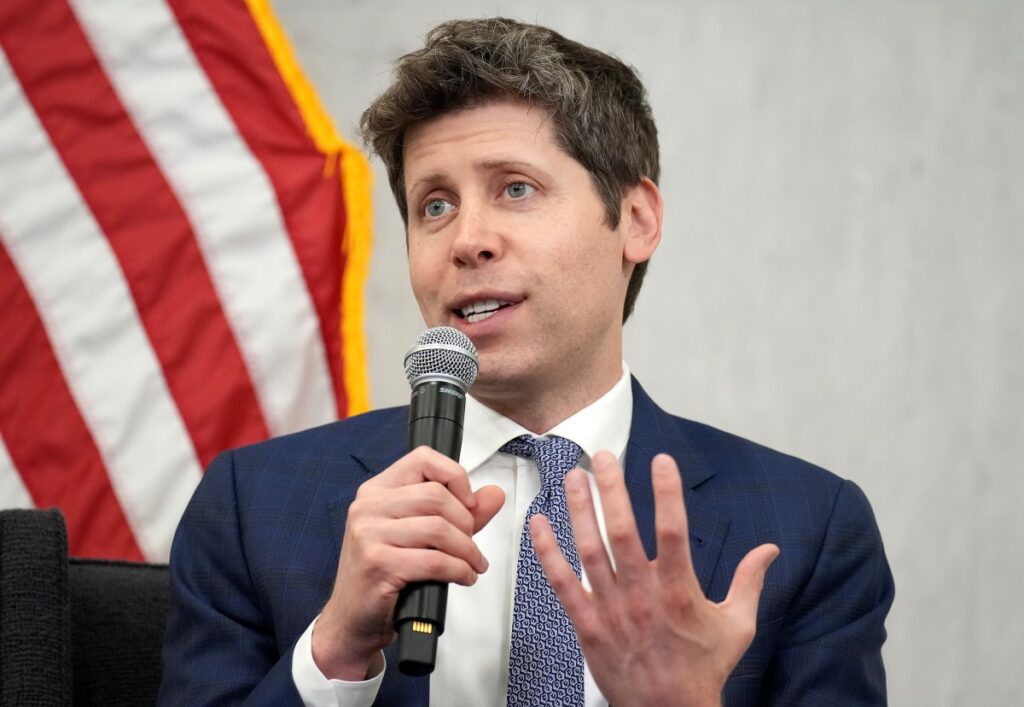
In a development that marks a significant evolution in the intersection of artificial intelligence and national security, OpenAI’s CEO Sam Altman announced on Friday an agreement with the Department of Defense (DOD) to implement the company’s AI models within the department’s classified network. This partnership comes in the wake of recent governmental directives, most notably from former President Donald Trump, advocating for a phased withdrawal from the use of competing AI technologies, notably Anthropic’s, citing national security concerns.
The implications of this partnership are multifaceted, particularly as they highlight a growing discourse regarding the role of AI in sensitive government functions. Altman’s statement underlined a commitment to safety and ethical standards, asserting that the DOD shares essential principles, including prohibitions on domestic mass surveillance and the importance of human oversight in instances of lethal force. These commitments are crucial in an era marked by apprehensions over autonomous weapon systems and the governance of AI technologies in critical infrastructures.
The DOD’s agreement with OpenAI reflects a strategic shift in how AI technology may be harnessed for national security purposes. From a business perspective, this partnership may set a precedent for the alignment of AI providers with government objectives and regulatory frameworks. This shift opens discussions around the competitive landscape of AI and automation platforms, particularly when drawing comparisons between OpenAI and key industry players such as Anthropic.
OpenAI’s models, known for their high scalability and adaptability, demonstrate a robust ability to integrate with governmental frameworks, providing seamless deployment capabilities that are critical for classified operations. By contrast, Anthropic’s technology has been differentiated through its focus on safety and alignment with human-friendly AI principles. While both platforms excel in different areas, the appropriateness of each solution can largely depend on the unique needs of an organization.
An analysis of costs associated with these technologies reveals that OpenAI’s advanced models often require significant initial investments and ongoing resource allocations for maintenance and updates. The return on investment (ROI) for deploying OpenAI’s models may, however, be favorable due to their ability to automate complex tasks, reduce human error, and enhance decision-making processes with data-driven insights. Conversely, Anthropic’s offering, though potentially lower in deployment costs, may lack the same scalability and robustness when utilized in high-stakes environments such as the DOD’s classified networks.
On another note, the discussion surrounding automation platforms presents a parallel comparison. For instance, platforms like Make and Zapier serve as alternatives for automating business processes, each with distinct advantages and weaknesses. Make, with its visual interface and comprehensive integration capabilities, tends to cater to users seeking a granular level of process design. In contrast, Zapier boasts an extensive library of applications and a user-friendly approach, making it more accessible for small to medium-sized business leaders looking to streamline operations quickly.
When weighing these platforms, scalability becomes a critical factor. Make tends to support deeper, more complex automations, well-suited for organizations that anticipate significant growth and require adaptable solutions. Zapier, while highly useful for immediate needs, may experience constraints on complexity as automation demands scale. Understanding these differences can guide SMB leaders in selecting the right tools for their specific operational needs.
As organizations consider the implementation of AI and automation solutions, an analytical approach to their choices is essential for maximizing effectiveness. The alignment of technology with overarching strategic goals, alongside vigilance in ethical governance, will dictate not only operational efficiency but also longer-term sustainability in an increasingly complex digital landscape.
FlowMind AI Insight: The recent agreement between OpenAI and the DOD serves as a compelling case study in the evolving role of AI in national security and advanced automation. As SMB leaders navigate the tools available for operational enhancement, prioritizing ethical considerations alongside technological capabilities will be paramount to achieving scalable, effective solutions.
Original article: Read here
2026-02-28 05:09:00