
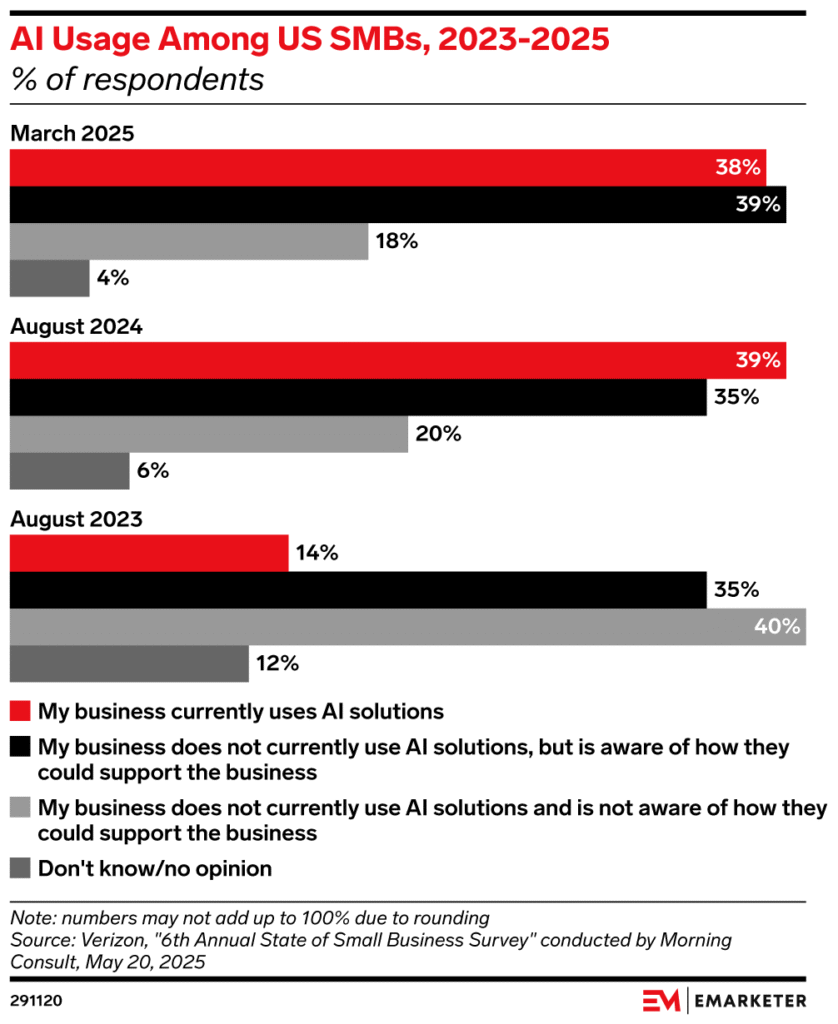
The adoption of artificial intelligence (AI) among small and medium-sized businesses (SMBs) has been a topic of substantial interest, yet practical implementation remains an uphill battle. Recent studies reveal that while approximately two-thirds of SMBs are utilizing AI for marketing and content creation, only 35% have extended its use into customer service. This indicates a significant disconnect between the enthusiasm surrounding AI and the readiness of businesses to deploy it for more complex functions. As SMB leaders and automation specialists consider the landscape of AI tools, it is crucial to analyze their strengths, weaknesses, costs, return on investment (ROI), and scalability, particularly through the lens of popular platforms such as Make, Zapier, OpenAI, and Anthropic.
Make and Zapier have emerged as frontrunners in the realm of automation platforms, each with its unique capabilities. Zapier is recognized for its simplicity and user-friendly interface, which allows non-technical users to automate workflows between web applications with minimal effort. Its extensive library of app integrations serves to streamline the onboarding process for organizations. However, the trade-off is that Zapier can become expensive as the scale of automation increases and businesses need to upgrade their plans to accommodate more tasks and integrations.
In contrast, Make, formerly known as Integromat, offers a more robust environment for creating complex automated workflows. It allows users to visualize their processes and create sophisticated integrations that can handle conditional logic, data conversion, and more. While this functionality is advantageous for power users, the learning curve can be steep, potentially deterring those without a technical background. Furthermore, Make’s pricing structure tends to be more flexible, allowing for scalable solutions tailored to an organization’s specific needs. However, the initial complexity can be a barrier for SMBs that may lack the technical expertise for effective utilization.
On the AI side of the equation, OpenAI and Anthropic represent two leading contenders. OpenAI’s GPT-4 is at the forefront of natural language processing and content generation, making it exceptionally beneficial for marketing, customer engagement, and content creation. The platform also supports developers through its available API, fostering innovative use cases across various industries. Nevertheless, the primary concerns for prospective users revolve around the ethical implications of AI use, including issues related to accuracy and the potential for generating misleading information.
In comparison, Anthropic, with its focus on an ethical approach to AI development, offers model designs that emphasize safety and alignment with human intent. Although Anthropic’s capabilities may not yet rival GPT-4 in terms of widespread use cases, its emphasis on ethical considerations appeals to businesses concerned about AI governance. However, the trade-off here is that the functionalities may be narrower, which can limit the versatility required by SMBs who wish to tap into diverse areas of automation and customer engagement.
The barriers to broader adoption of AI tools within SMBs can largely be attributed to a lack of training and expertise among employees. Research indicates that 26% of SMBs cite training as a significant concern regarding AI adoption, alongside worries about the accuracy and reliability of AI outputs. Furthermore, 16% express concerns over the costs associated with AI, while 8% find the path to ROI unclear. This hesitance underscores a critical need for organizations to invest in not only the tools but also the foundational training that prepares employees to leverage AI effectively.
To facilitate the transition from curiosity to capability, SMBs should adopt a strategic approach. First, organizations should emphasize the upskilling of employees as a means to differentiate themselves from competitors. By integrating AI education into the core of employee training, SMBs can empower their workforce to embrace technology confidently, thereby securing a competitive advantage when workflows evolve.
Next, initiating low-risk pilot projects offers another strategic avenue for businesses. Rather than fully committing to advanced AI applications in mission-critical tasks, organizations can test AI capabilities in less central areas, such as drafting invoices, creating FAQs for customer service, or streamlining administrative scheduling. These small-scale tests can build internal confidence while generating valuable data to refine processes further.
Lastly, to foster trust in AI outputs, organizations must combine AI technologies with human oversight. This approach ensures that employees understand AI as a collaborative tool rather than a threat to their positions. By demonstrating how AI enhances productivity and reduces manual errors, businesses can mitigate resistance and pave the way for more significant adoption.
In conclusion, while the potential for AI to transform operational capabilities in SMBs is undeniable, challenges remain concerning skills, costs, and practical deployment. A deliberate focus on education, pilot testing, and trust-building strategies can bridge the gap between interest and implementation. By navigating these complexities with robust tools such as Make and Zapier for automation and OpenAI and Anthropic for AI solutions, SMBs can foster a future where technology enhances productivity and innovation.
FlowMind AI Insight: The journey toward AI integration in small and medium-sized businesses is as much about technological capability as it is about cultural readiness and employee training. Investing in skills development, alongside a deliberate and strategic approach to technology deployment, can significantly accelerate the realization of AI’s benefits in operations.
Original article: Read here
2025-09-29 07:00:00