
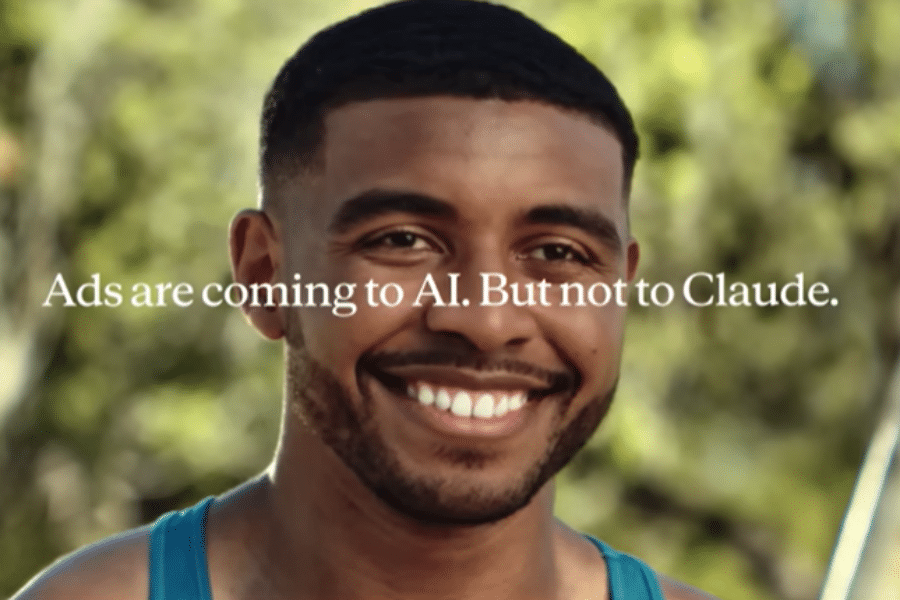
In recent developments within the artificial intelligence landscape, Anthropic, the startup behind the Claude chatbot, has made its Super Bowl debut with an advertising campaign that directly critiques competitors like OpenAI. This high-profile advertisement took particular aim at OpenAI’s decision to integrate ads within its ChatGPT interface. By framing the narrative around a personal trainer dispensing biased advice—interrupted by ad feeds—Anthropic seeks to differentiate Claude as a tool free from such distractions. This strategic positioning not only accentuates the competitive tension between the two companies but also raises significant questions about the trajectory and sustainability of AI monetization strategies.
Anthropic’s firm commitment to maintaining an ad-free experience has been clearly articulated. The company follows up its Super Bowl ad with a public statement asserting that there are appropriate venues for advertising, but a conversation with Claude is not one of them. This reinforces its vision of Claude as a genuinely helpful assistant designed for work and deep thinking. Moreover, the emphasis on an ad-free model can serve as a double-edged sword. While it appeals to prospective users who prioritize focused and unbiased assistance, it also presents challenges related to revenue generation.
In analyzing the competitive landscape between AI platforms, particularly Claude and ChatGPT, we must consider several critical factors: strengths, weaknesses, costs, return on investment (ROI), and scalability. OpenAI, with its established reputation and expansive user base, can leverage monetization strategies like ad placements to fund its ongoing research and development. The introduction of ads in ChatGPT undoubtedly creates a substantial revenue stream, which the company can reinvest into enhancing features and capabilities.
Conversely, Anthropic’s ad-free strategy, while noble and appealing, raises questions about its financial viability. Relying on subscription models and enterprise deals may limit its growth potential compared to OpenAI, which has effectively tapped into diverse revenue channels. Moreover, the risk for Anthropic lies in whether its user base will expand sufficiently to justify the costs associated with maintaining and developing its AI technology without advertising revenue. This positions Anthropic in a precarious balance—its attractive user experience hinges on a financial model that may not generate comparable returns to that of its competitor.
The question of ROI is multifaceted when it comes to evaluating AI tools. For small and medium-sized businesses (SMBs) looking to adopt automation technologies, the choice between platforms like Claude and ChatGPT will depend on specific needs and use cases. For example, while Claude may excel in providing an unadulterated advice framework conducive to decision-making, ChatGPT’s monetized environment could offer more robust integrations with existing business tools, leveraging the financial backing necessary for continuous evolution.
Cost structures in these AI tools vary significantly. OpenAI’s ChatGPT could present strong upfront costs due to initial subscription fees, yet the return on investment might be realized through increased productivity and automation capabilities. Meanwhile, Anthropic’s Claude could provide more value in terms of focused assistance, albeit potentially lacking in broad integration capabilities and real-time innovation momentum. SMB leaders should consider not only the direct costs associated with each platform but also the indirect costs related to the scalability of operations and the time investment needed for training employees on new tools.
The scalability of AI and automation solutions presents another critical factor in the decision-making equation. OpenAI, with its established ecosystem, has the advantage of iterative development. The capacity for swift adaptation in response to market demands exemplifies a key strength in its platform. Anthropic, while focused on ensuring a non-intrusive user experience, must navigate the complexities of building a scalable model that can compete effectively in the marketplace. It remains to be seen how well Claude will adapt and evolve while adhering to its principles of providing ad-free and helpful assistance.
Ultimately, the marketing tactics employed by both companies serve as a microcosm of the larger tension underscored by competitive strategy within the AI landscape. Anthropic’s targeted messaging showcases a distinct commitment to a particular user experience, which, while valuable, may need to evolve in order to secure its financial stability. SMB leaders and automation specialists must examine the implications of these approaches, recognizing that the AI platforms they choose will have lasting impacts on their organizational efficiency and innovation trajectory.
As businesses increasingly integrate AI solutions into their operations, informed decision-making grounded in a thorough understanding of the competitive landscape will be essential. Companies must balance their desire for ad-free experiences with the practical requirements of growth and innovation. Deploying AI is about more than just selecting a tool; it involves aligning technology choices with overarching strategic goals.
FlowMind AI Insight: The evolving landscape of AI platforms highlights the need for a nuanced understanding of both user experience and financial sustainability. SMB leaders should not only consider the immediate functionality of AI tools but also their long-term viability and the strategic implications of platform choices as they integrate these technologies into their operations.
Original article: Read here
2026-02-05 01:05:00