
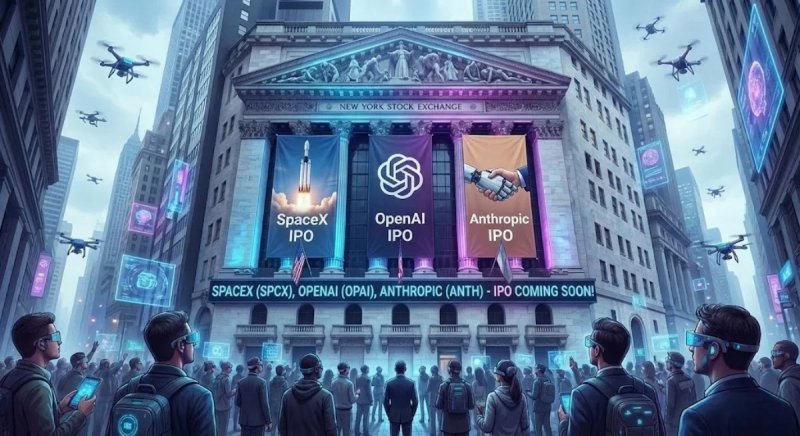
The tech industry is on the brink of a potentially transformative period as high-profile private companies such as SpaceX, OpenAI, and Anthropic are poised to initiate initial public offerings (IPOs) in 2026. Investors and industry leaders are closely monitoring these developments, given their potential to reshape financial markets, attract substantial investments, and provide unique opportunities to engage with some of the most innovative companies globally.
The anticipated IPOs signal a significant shift in the investment landscape, particularly as the valuations of these companies continue to grow. Market reports suggest that the collective proceeds from these offerings could exceed the total earnings of approximately 200 U.S. IPOs in the preceding year. This anticipated financial influx opens avenues not only for institutional investors but also for mid-sized businesses looking to capitalize on cutting-edge technology and innovation.
OpenAI, led by Sam Altman, has emerged as a frontrunner in the AI landscape. Its recent valuation of $500 billion underscores the soaring demand for products like ChatGPT and the growing revenue streams from both subscription and enterprise segments. Anticipating future growth, OpenAI is aiming for an ambitious target of $200 billion in annual revenue by 2030. However, it is essential to consider the competitive dynamics and comparative strengths of other players in the AI space, such as Anthropic and, more broadly, automation tools like Make and Zapier.
Anthropic, backed by Amazon, is reportedly preparing for its IPO with legal counsel from Wilson Sonsini. The company has set a valuation target of around $350 billion, reflecting its commitment to advancing responsible AI development. The growing focus on ethical AI could serve as a differentiator as organizations face increasing scrutiny around data use and algorithmic accountability.
When analyzing AI platforms, OpenAI and Anthropic offer fundamentally different approaches, which may appeal to diverse business needs. OpenAI has made significant strides in natural language processing, yielding powerful tools that can enhance productivity and customer engagement. The agility and scalability of its offerings make it particularly attractive for small to medium-sized businesses (SMBs) looking to streamline operations through automation. On the other hand, Anthropic has emphasized AI safety and interpretability, which could resonate with organizations prioritizing ethical considerations in their technology strategies.
In contrast, platforms like Make and Zapier represent the automation frontier, encouraging businesses to improve workflows and improve efficiency without requiring extensive technical know-how. Zapier offers a user-friendly interface that is ideal for SMBs to connect various web applications seamlessly, empowering teams to automate repetitive tasks without the need for in-house coding. Make takes this a step further with an advanced toolset that allows for intricate automation scenarios, appealing to companies with more complex needs. However, the cost structures of these platforms can differ significantly.
Zapier operates on a tiered subscription model, which can be cost-effective for smaller organizations, but may escalate for those with extensive automation requirements. On the other hand, Make’s pricing may reflect greater ROI in environments where complex automation can lead to significant time and labor savings. Ultimately, the choice between these two tools should align with the specific automation goals of the business, as well as budgetary constraints.
Evaluating ROI across these technologies encompasses both tangible and intangible factors. While upfront costs are vital, the long-term value derived from increased efficiency, reduced error rates, and enhanced customer satisfaction must also inform decision-making. Deploying AI solutions, such as those offered by OpenAI or Anthropic, can further augment automation efforts by adding intelligence to the process, allowing for enhanced decision-making and adaptability.
In terms of scalability, OpenAI and Anthropic both provide cloud-based solutions that can grow alongside a business, whereas Make and Zapier are designed with scalability in mind from their origins. SMB leaders should assess their long-term growth aspirations and operational flexibility when determining which platforms facilitate expansion while maintaining efficiency.
As we look toward the potential 2026 IPO wave, it is imperative for SMB leaders and automation specialists to take a proactive stance in evaluating their technology stack. Engaging with platforms that promise robust AI capabilities and superior automation can position organizations to thrive in an increasingly competitive environment. Strategic investments in these technologies can create significant advantages, particularly as the marketplace evolves and the demand for innovation intensifies.
Ultimately, the interplay between these leading AI and automation platforms could define the future operational landscape for SMBs worldwide. Organizations are encouraged to conduct thorough assessments of their automation needs, including identifying the degree of complexity required and weighing the cost considerations against potential returns.
FlowMind AI Insight: As the market anticipates monumental shifts with the upcoming IPOs of key innovative players, SMB leaders must prioritize agility and adaptability in choosing technology solutions. Incorporating AI-driven automation can significantly mitigate operational inefficiencies, empowering businesses to harness new opportunities while navigating an evolving digital landscape.
Original article: Read here
2026-01-01 13:39:00