
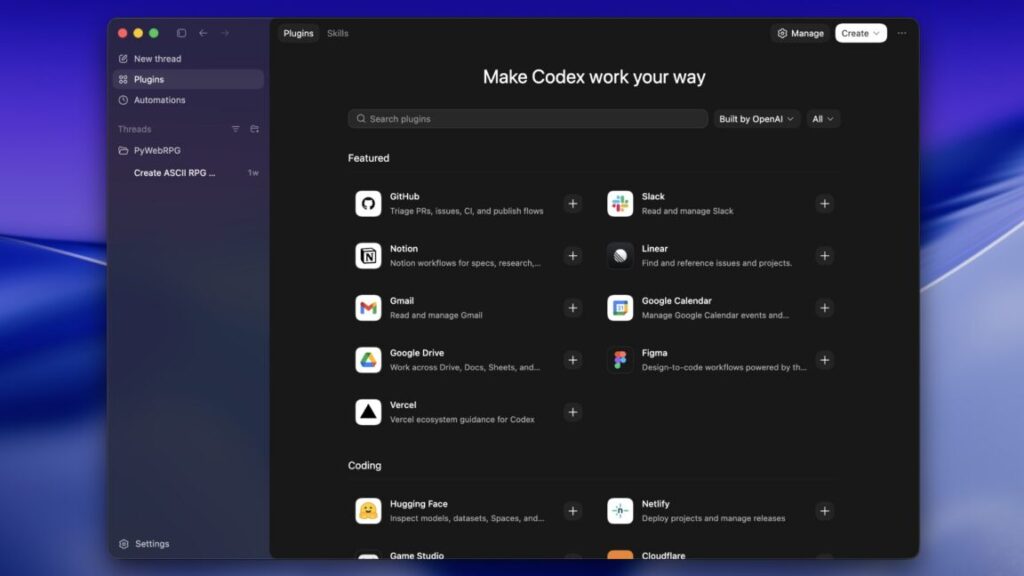
OpenAI’s recent introduction of plugin support for its Codex platform is a significant development in the competitive landscape of AI-driven automation tools. This move aims to bolster its position against offerings from rivals like Anthropic’s Claude Code and Google’s Gemini command line interface. Each platform strives to optimize user experience through enhanced functionality, yet the nuances in their approach reveal critical insights for SMB leaders and automation specialists.
OpenAI’s “plugins” are designed to facilitate specific workflows, merging app integrations and model context protocols (MCP). Although power users previously had the option to incorporate custom instructions and server functionalities, the new plugin system streamlines these processes into a more user-friendly, one-click installation. Vendors like Anthropic and Google have similarly recognized the importance of accessibility in their user interfaces and feature sets. For instance, Claude Code offers integrated functionalities that allow users to easily execute complex commands without delving too deeply into technical specifications, allowing larger organizations to leverage advanced capabilities without extensive training.
When analyzing the strengths and weaknesses of these systems, it becomes clear that user accessibility is paramount. OpenAI’s Codex, with its focus on a single-segment integration library—featuring well-known applications like GitHub and Gmail—stands out for organizations already rooted in those ecosystems. The potential for cohesive workflows could lead to enhanced productivity, especially in collaborative environments, which is crucial for SMBs looking to scale.
However, this should not overshadow the strengths of competing platforms. Anthropic’s Claude Code provides an equally robust integration process, with a wider variety of use-cases powered by advanced natural language processing capabilities. This advantage may result in better performance in niche applications or more complex automation scenarios. Google’s Gemini offers a comprehensive command line interface, making it extremely versatile for developers focused on customization and intricate automation tasks, albeit with a steeper learning curve. Organizations should consider whether they prioritize ease of use or customizable depth when aligning with a platform.
On the cost front, SMB leaders need to factor in more than just the purchase price. OpenAI’s plugins could lead to decreased operational costs through reduced training times and enhanced user efficiency. Gartner’s research indicates that organizations that implement automation systems generally witness a return on investment (ROI) of around 20-30% within the first year, a benchmark worth considering when evaluating platforms. However, as each platform’s pricing models diverge—OpenAI charging on a per-use basis, while others like Zapier tend to have subscription tiers or usage pools—executives should perform a detailed analysis of projected usage patterns against expected costs.
Scalability remains a vital factor in the choice of an AI platform. OpenAI’s model, while initially straightforward due to its curated plugin library, may struggle with the need for extensive customization as organizations grow. In contrast, platforms like Make provide more robust features that allow for detailed workflow adjustments, potentially offering superior adaptability in scaling operations. Conversely, as firms grow, they may find themselves weighed down by esoteric functionalities that become overwhelming without proper support or guidance.
An additional consideration is user community and third-party support. OpenAI’s established network of developers and its new plugin architecture means that users can locate assistance or share workflows more easily. This ecosystem can foster innovation as users broaden their operational capabilities through communal insights. Ultimately, organizations should evaluate the extent to which they wish to lean on such communities for their success.
In conclusion, as businesses deliberate on the best automation platform, several clear takeaways emerge. The effectiveness of OpenAI’s Codex model lies in its user-friendly interface and targeted functionalities, which can lead to enhanced efficiency in known workflows. Conversely, competitors like Anthropic and Google offer distinct advantages tailored to complex, customized environments. Therefore, the decision of which platform to choose should closely align with an organization’s specific operational needs and growth strategy. Optimization requires a nuanced understanding of both existing capabilities and future aspirations.
FlowMind AI Insight: As the landscape of AI-driven automation continues to evolve, SMB leaders must prioritize the alignment of technology to their operational strategies. An informed decision about platform selection not only impacts immediate efficiency but lays the groundwork for sustainable future scalability and growth.
Original article: Read here
2026-03-27 21:53:00