
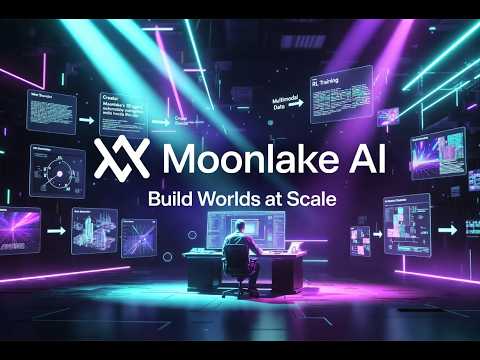
In the rapidly evolving landscape of artificial intelligence, tools like Moonlake AI are transforming how we conceptualize and create interactive 3D environments. However, for small to medium-sized businesses (SMBs) considering AI solutions, it’s essential to evaluate and compare various options available in the market, particularly in terms of features, reliability, pricing, integrations, and support.
Moonlake AI is at the forefront of creating multimodal world models that allow users to generate complex, playable 3D environments from simple language prompts. With its foundation in advanced reasoning models, it excels at automatically creating intricate scenes and interactive settings in Blender. This capability makes it particularly appealing for game developers and simulation engineers who demand high-quality assets quickly.
In contrast, Unity, known primarily as a game development platform, offers AI features through its ML-Agents Toolkit. This toolkit provides developers with tools to create intelligent agents capable of learning from their environments. While Unity is robust in asset creation and deployment, it often requires a more extensive knowledge of game design principles, which may pose a learning curve for teams unfamiliar with the platform.
Moonlake AI’s integration is seamless, allowing developers to work within industry-standard tools without needing extensive training. Unity, however, provides extensive documentation and a larger community for troubleshooting and advice, valuable resources for SMBs navigating their AI journeys.
In terms of pricing, Moonlake AI is still in the early access stage, and while specifics may vary, it’s essential for SMBs to consider potential costs associated with high computational demands. Unity operates on a subscription basis, with tiers ranging from a free version for small teams to paid versions that offer enhanced features and capabilities. Depending on the size and project scope, SMBs must evaluate which subscription model aligns best with their budget and project needs.
When considering limits, Moonlake AI showcases strong potential for automated 3D scene creation, but it’s important to note that this technology is still developing. Teams often report that optimal results might necessitate an understanding of prompt engineering and familiarity with Blender. In contrast, Unity’s established community means that issues can often be quickly resolved, thanks to the extensive resources available.
Support also differentiates the two platforms. Moonlake AI, while innovative, has limited feedback options available due to its current development stage. Users may find community support lacking compared to Unity’s comprehensive forums, tutorials, and direct customer service channels.
In practical scenarios, a team looking to create an immersive training simulation might lean toward Moonlake AI for its advanced capabilities in real-time generation. For instance, imagine a company needing a virtual mall for training sales employees. Moonlake can generate a detailed environment based solely on a brief prompt, cutting time and effort significantly. Conversely, a game studio might choose Unity when developing a new title that requires a broader range of assets managed within a collaborative framework, backed by extensive community resources.
Migration to either platform should be approached methodically. For businesses considering Moonlake AI, pilot tests can be conducted by selecting a single project to assess the AI’s capabilities. Start with a prompt to create a basic scene, then gradually increase complexity. For Unity, existing projects can be expanded using the ML-Agents Toolkit by conducting a low-risk pilot on a smaller game or simulation prototype, allowing teams to tailor their approach and maximize investment.
The total cost of ownership for each platform entails not just subscription fees but also the time and resources spent on training and potential hardware necessary for development. While Moonlake AI’s capabilities may often offset its computative demands, transitioning to it may prompt hardware upgrades, especially for visually intensive projects. Unity’s structured pricing allows flexibility for SMBs as they scale, with clearly defined costs depending on usage.
Expected ROI over three to six months can vary significantly. For teams using Moonlake AI, rapid project turnaround can lead to quicker revenue streams in game sales or training solutions, potentially yielding a higher ROI. Meanwhile, companies utilizing Unity could experience steady returns as they incrementally improve game iterations and expand their offerings, supported by stable customer engagement from their established base.
FlowMind AI Insight: When evaluating tools like Moonlake AI and Unity, understanding each platform’s strengths and challenges is crucial for SMBs. These insights can empower businesses to make informed decisions about investments in AI technologies, aligning capabilities with specific project goals to optimize both operational efficiency and financial returns.
Original article: Read here
2026-06-16 10:04:00