
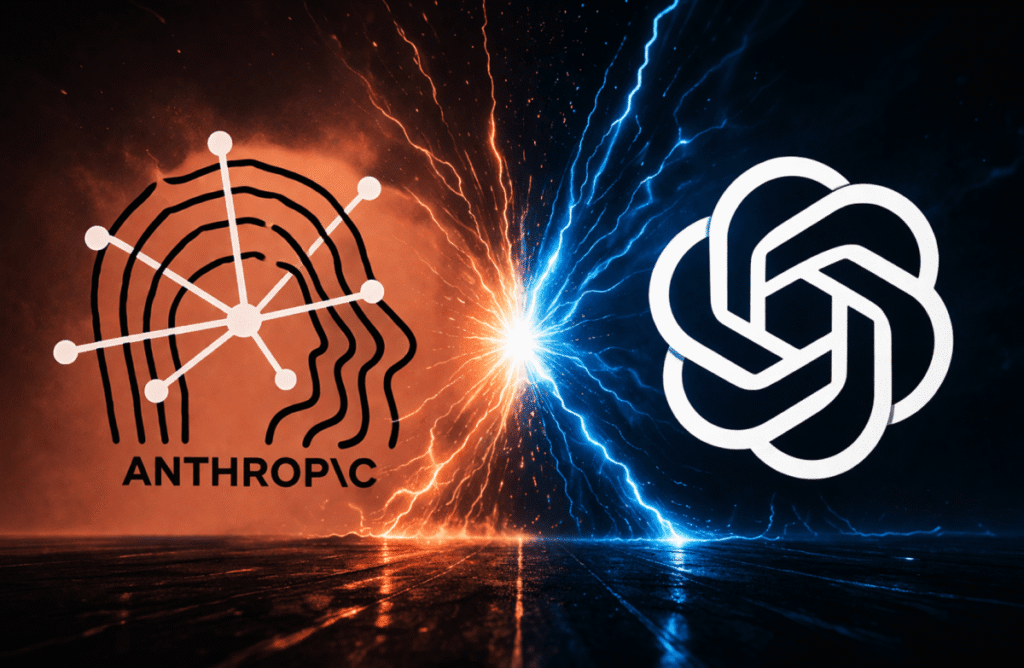
OpenAI’s recent valuation of $852 billion is drawing skepticism from investors, particularly in light of its efforts to pivot towards enterprise clients while navigating increasing pressure from competitors like Anthropic. The sharp growth in demand for Anthropic’s coding tools, which has propelled their annual revenue from $9 billion in 2025 to an impressive $30 billion by March of this year, presents a compelling case for re-evaluating the landscape of AI and automation platforms.
Investors who have supported both companies are now faced with the challenge of justifying OpenAI’s lofty valuation. The conversation often hinges on the assumption that OpenAI will achieve an IPO valuation of $1.2 trillion or greater. Such projections elevate Anthropic’s current valuation of $380 billion into a position that, while significant, seems more manageable in comparison to the inflated expectations surrounding OpenAI.
The secondary market, a bellwether for investor sentiment, reflects a similar trend. Demand for shares of Anthropic are becoming increasingly robust, while shares of OpenAI are trading at a discount. This discrepancy illustrates a growing concern among shareholders regarding the sustainability of OpenAI’s market dominance. Historically, Sam Altman has navigated the complexities of aggressive valuation inflation, particularly during his time at Y Combinator. The challenge remains: balancing ambitious financial expectations with the realities of market competition and economic conditions.
OpenAI’s Chief Financial Officer, Sarah Friar, asserts that their recent $122 billion fundraising—which marks the largest private fundraising round in history—demonstrates unyielding investor confidence. Yet, this perspective is not universally shared. For example, Jai Das, president of Sapphire Ventures, analogized OpenAI to “the Netscape of AI,” suggesting that past successes do not guarantee future market leadership. As history serves as a cautionary tale, such comparisons merit careful analysis.
When examining the AI and automation platforms available today, a critical distinction emerges between the tools offered by OpenAI and those from competitors such as Anthropic. OpenAI’s capabilities, while advanced in generative AI and natural language processing, face stiff competition from Anthropic’s offerings, which prioritize safety and user experience. Each platform has its strengths and weaknesses that should be carefully weighed.
OpenAI has established a comprehensive suite of tools designed for a myriad of applications, ranging from chatbots to software development tools. One of its notable strengths is its vast data training set, which allows for nuanced understanding and execution of complex tasks. However, the challenge comes with its cost structure. For businesses, particularly SMBs, the initial investment to integrate OpenAI’s tools can be formidable. While the potential return on investment (ROI) can be substantial with proper implementation, the upfront costs can be a barrier for smaller organizations.
In contrast, Anthropic’s rise can be attributed to its customer-centric approach and the rapid deployment of coding tools that prioritize ease of use. This platform has been designed with safety and ethical considerations at its core, aimed at minimizing potential misuse or erroneous outputs. For SMBs, the lower costs associated with implementing and scaling Anthropic technologies present a more accessible pathway to adopting AI solutions. Moreover, the rising demand for Anthropic’s tools indicates a positive market reception, suggesting that their positioning may continue to strengthen.
When considering scalability, both platforms offer robust solutions but necessitate different strategic approaches. OpenAI’s tools may provide high scalability but require significant technical expertise and resources to implement efficiently. Conversely, Anthropic’s emphasis on user-friendliness makes it a more attractive option for smaller teams or those lacking dedicated tech resources.
In summary, while OpenAI’s monumental valuation raises questions and generates skepticism among investors, Anthropic’s rapid advancement highlights a notable shift in the AI landscape. Businesses looking to leverage AI and automation need to align their choice of platform with their specific needs, cost constraints, and scalability requirements. The potential for innovative growth is profound, yet firms must proceed with diligence, informed by both the current market dynamics and the lessons gleaned from past technological disruptions.
FlowMind AI Insight: As the landscape of AI tools evolves, businesses must remain agile, ready to pivot their strategies based on technological advancements and competitor movements. Fostering a thoughtful approach to AI adoption—considering factors like usability, cost, and scalability—can significantly influence long-term success in an increasingly competitive market.
Original article: Read here
2026-04-15 02:31:00