
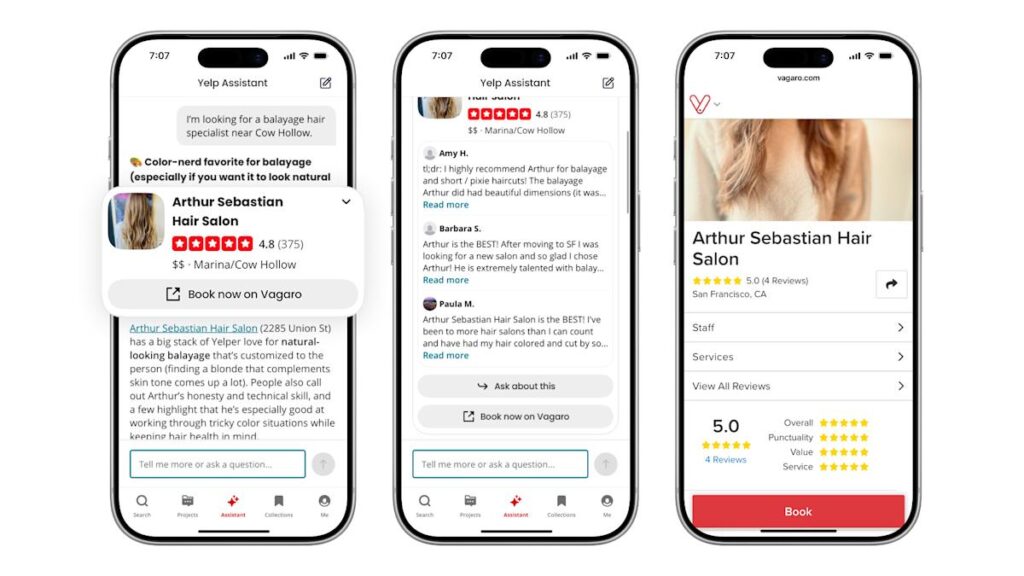
The surge in AI tools has compelled businesses to reconsider how they engage their customers. Yelp, a prominent player in the online review space, has introduced significant updates to its Yelp Assistant, a chatbot designed to enhance the customer experience. This advancement reflects a broader trend where businesses are increasingly adopting AI to streamline operations and improve customer interactions. However, companies, particularly small to medium-sized businesses (SMBs), should carefully evaluate various AI solutions before implementation.
Yelp Assistant’s recent updates signify its evolution from a relatively limited tool to a robust system capable of managing natural language inquiries and facilitating actions such as restaurant reservations and takeout orders. With integration capabilities extending to third-party services like Vagaro and ZocDoc, Yelp Assistant provides enhanced utility across different categories. The chatbot not only interacts with customers but also facilitates transactional capabilities, positioning it as a versatile option for businesses seeking to enhance customer service.
Another comparable tool in the AI landscape is Drift, which focuses on conversational marketing and sales. Drift employs AI chatbots to engage website visitors, qualify leads, and schedule meetings with sales representatives. While Yelp Assistant primarily serves to enhance customer interactions within the Yelp ecosystem, Drift is more narrowly focused on lead generation and sales conversion. Drift offers features like real-time notifications, a customizable chat interface, and integration with numerous CRM systems, making it a strong candidate for businesses prioritizing lead management.
When it comes to reliability, both tools present solid options, but their effectiveness relies heavily on the frameworks within which they operate. Yelp Assistant is fully integrated within Yelp’s ecosystem, ensuring it can leverage extensive user data and feedback. This integration provides contextual relevance in interactions, making it easier for customers to receive tailored recommendations. On the other hand, Drift’s efficacy largely depends on the volume of web traffic a business receives and how well it can convert those interactions into actionable sales leads.
Regarding pricing, Yelp Assistant is generally included within Yelp’s business service packages. This means that businesses pay a subscription fee that typically aligns with their level of engagement on Yelp. Alternatively, Drift offers a tiered pricing structure based on features required. For smaller businesses, the basic package might be sufficient, while larger organizations may need the more advanced features available in higher-tiered plans. The pricing differences may make Yelp Assistant more appealing for businesses already invested in Yelp’s ecosystem, whereas Drift may serve companies looking for dedicated sales and marketing tools.
Both Yelp Assistant and Drift provide integration capabilities, but with different focuses. Yelp Assistant integrates with local services relevant to hospitality and appointments, while Drift has extensive CRM, marketing, and sales tool integrations. For businesses needing a comprehensive lead management system along with customer service capabilities, Drift may stand out as the preferred choice. In contrast, for businesses that primarily serve customers through the Yelp platform, Yelp Assistant provides a more streamlined experience.
When assessing which tool is the better choice for deployment, companies should consider their primary objectives. If a business is focused on lead generation and sales, implementing Drift may yield more immediate benefits. A coffee shop, for example, could use Drift to capture potential customers visiting their website and encourage them to book reservations or join a mailing list. Conversely, a local restaurant aiming to enhance its customer service experience may benefit significantly from leveraging Yelp Assistant, particularly if it prioritizes improving its online reputation and facilitating reservations directly through Yelp.
Migration to either AI system should be approached cautiously, with a well-planned pilot program to mitigate risks. For Yelp Assistant, a business could initially implement the chatbot for a select set of services, allowing customers to make reservations and order takeout through Yelp. This low-risk approach helps gauge customer satisfaction and system integration without overwhelming existing processes. Similarly, for Drift, businesses can start by deploying the chatbot on specific high-traffic web pages and analyzing engagement metrics and lead conversion rates before a full rollout.
The total cost of ownership for implementing either tool can vary widely based on the business’s specific needs and chosen plans. For Yelp Assistant, the primary costs would likely be associated with Yelp subscription fees, while Drift users may find variable costs based on usage and subscriptions. Over a period of three to six months, many organizations have reported an ROI that stems from improved customer retention, higher lead conversion rates, and enhanced customer experiences. For instance, a local restaurant using Yelp Assistant saw a 20% increase in repeat customers after rolling out the chatbot, justifying both the initial investment and ongoing subscription costs.
In conclusion, choosing between Yelp Assistant and Drift depends on a business’s specific goals, customer engagement strategies, and integration needs. Both tools offer unique advantages, and understanding their features, pricing, and best-use scenarios can allow SMBs to make informed decisions.
FlowMind AI Insight: As businesses navigate the evolving landscape of AI tools, understanding the distinct features, capabilities, and impacts on customer engagement is essential to maximize potential benefits while minimizing risks. Each tool has unique strengths, and the right choice ultimately aligns with the business’s goals and operational strategies.
Original article: Read here
2026-04-21 11:00:00